

Why the least glamorous mineral in your supplement cabinet might be doing more work than any vitamin you own
Ask someone to name an essential vitamin, and they will rattle off C, D, or B12 without blinking. Ask them to name an essential mineral, and the conversation usually stalls. Zinc never gets the marketing budget of the vitamins, yet it is required as a cofactor for more than 300 enzymes and is a structural component of over 3,000 proteins in the human body, more than almost any other nutrient science has mapped. *
Here is what that actually means in plain terms. A cofactor is a helper molecule an enzyme cannot function without, like a key an engine needs before it will turn over. Zinc must be physically present for hundreds of enzymes to carry out tasks such as digesting food, repairing DNA, and producing energy inside your cells. Without it, the enzyme simply sits idle, no matter how much of everything else is in place.
Being a “structural component” of a protein means something even more literal: zinc is holding that protein’s shape together, the way a skeleton holds up a body. This is especially true of a class of proteins called zinc finger proteins, which fold into the precise shape needed to read and switch genes on and off. Take away the zinc, and the protein loses its shape and its job at the same time.
It shows up in immune defense, skin repair, taste, smell, and the reproductive system, often all at the same time. And because the body has no dedicated zinc reserve the way it stores fat-soluble vitamins, it is also one of the easiest nutrients to quietly run low on.
The Mineral Hiding in Plain Sight
Zinc is the second most abundant trace mineral in the body after iron, but it behaves nothing like a stockpiled nutrient. There is no zinc “reserve tank.” Once daily intake dips, enzyme activity across the body starts to slip almost immediately, which is part of why zinc status is so tightly linked to how resilient the immune system, skin, and hormones are in real time. *
This is a bigger issue than most people assume. Researchers estimate that roughly 17.3 percent of the world’s population, over a billion people, is at risk of inadequate zinc intake, with rates climbing even higher in populations that rely heavily on grains and legumes, which contain compounds that block zinc absorption. *

Deficiency Signs Checklist
If several of these sound familiar, zinc status is worth a closer look:
- Poor or slow wound healing (zinc is a required cofactor for collagen synthesis)
- Getting sick more often than people around you
- Loss of taste or smell
- White spots on the fingernails
- Acne or persistent skin breakouts
- Low libido
- Thinning hair or accelerated hair loss
- Poor night vision


The Thymus Connection: Why This Matters More Right Now
The thymus is the small gland behind the breastbone where immune cells called T-cells go to “graduate” before they are released into circulation to fight off infection. It may be the single most zinc-dependent organ in the body.
Researchers at Fred Hutchinson Cancer Center found that depriving mice of dietary zinc for as little as three weeks caused the thymus to visibly shrink and produce far fewer mature T-cells. When zinc was reintroduced, the thymus regenerated and T-cell output recovered.* The same pattern has been documented in humans for decades: in cases of severe zinc deficiency, the thymus can shrink to nearly nothing, and correcting the deficiency allows thymic tissue, and immune output, to rebound.*
This matters beyond a cold season. The thymus naturally shrinks with age in a process called thymic involution, so as the body gets older it leans even more heavily on adequate zinc status just to keep producing new immune defenders. And because the same zinc-dependent pathways that govern thymic and immune function also intersect with hormonal and reproductive signaling, this quiet mineral sits directly at the crossroads of the immune struggles and hormonal complaints so many people are dealing with simultaneously right now.

Zinc’s Other Full-Time Job: Reproductive Health
Of every organ in the male body, the prostate gland holds the highest concentration of zinc, and disturbances in prostate zinc levels are closely tied to prostate health. * Zinc is also directly involved in testosterone synthesis and sperm production.
A meta-analysis pooling data from more than 2,600 men found that seminal zinc concentrations were significantly lower in infertile men compared to fertile controls, and that zinc supplementation significantly improved semen volume, sperm motility, and sperm morphology.* On the female side, healthy egg maturation and the biochemical “spark” that occurs at fertilization both depend on precise zinc regulation inside the egg cell, a discovery that has reshaped how researchers think about fertility at the cellular level.

The Copper Balancing Act: Zinc’s Required Partner
Zinc does not work alone, and it should never be supplemented as if it does. Zinc and copper share the same absorption pathway in the gut, which puts them in a seesaw relationship: push zinc intake too high without adequate copper, and the body starts pulling down its copper reserves, which over time can contribute to anemia and, in more severe cases, neurological symptoms. *
A 2023 clinical review found that zinc-induced copper deficiency is significantly under-diagnosed and is almost always tied to unnecessarily high doses of isolated zinc taken over long periods. * It is a strong argument for getting zinc the way it shows up in whole foods, alongside its natural mineral partners, rather than as a mega-dose in isolation.

Quick-Hit Zinc Facts Worth Knowing
- Food is still the gold standard: zinc absorbed from whole foods is bundled with the natural cofactors, like copper, vitamin C, and amino acids, that help your body actually take it up and use it, which is why whole food sources remain the most bioavailable and dependable way to build zinc status, rather than an isolated mineral salt on its own.*
- It can shorten a cold: a meta-analysis of seven randomized trials found that zinc lozenges taken within 24 hours of the first symptoms shortened the common cold by an average of 33 percent. *
- The taste-smell link is real: an enzyme in saliva and nasal tissue called gustin, which governs taste and smell, is itself a zinc-dependent protein, one reason researchers investigated zinc status in COVID-related smell and taste loss. *
- Oysters earned their reputation honestly: their old folk status as an aphrodisiac line up with real biology, since no other food on earth delivers zinc this densely.
- Your brain has a zinc hotspot: the hippocampus, the brain’s memory center, holds the highest concentration of zinc of any brain region.

Building Zinc Back In, the Whole Food Way
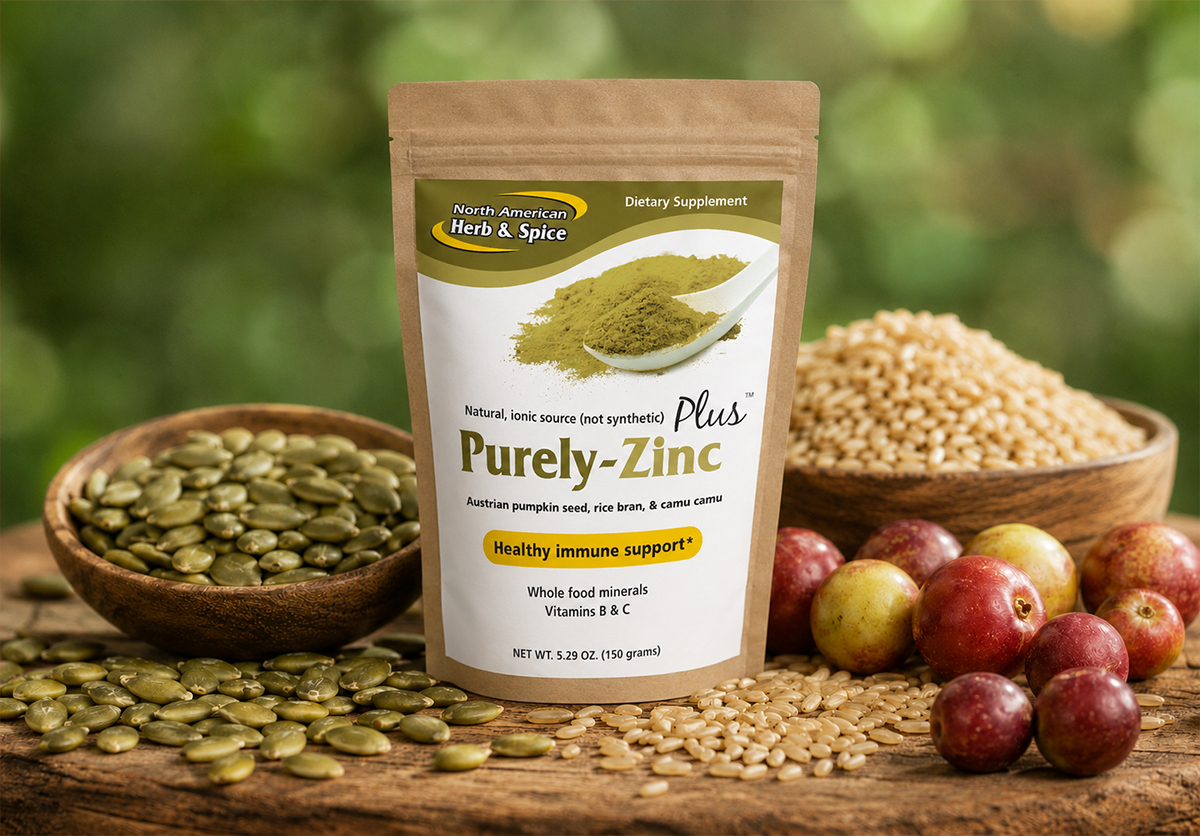
Purely-Zinc Plus is built around Styrian Austrian pumpkin seed powder, rice bran, and wild camu camu berries (vitamin C), delivering ionic zinc alongside the naturally occurring copper, magnesium, manganese, iron, and phosphorous that whole foods provide together rather than in isolation. One serving provides 40 percent of the daily zinc need for men and 52 percent for women, the way your body was designed to receive it.*
SHOP PURELY-ZINC PLUS: https://www.northamericanherbandspice.com/shop/purely-zinc-plus/
Purely Liver is made from 100 percent grass-fed and grass-finished New Zealand beef liver, freeze-dried to preserve its nutrient profile and fortified with oregano P73. While it is not a zinc-forward formula, liver is one of the richest natural sources of bioavailable copper, zinc’s essential dietary partner, alongside more than 30 other nutrients including vitamin A, B12, and iron. Pairing a whole food zinc source with a whole food copper source is the closest a supplement routine can get to how these two minerals actually show up together in nature.*
SHOP PURELY LIVER: https://www.northamericanherbandspice.com/shop/purelyliver-capsules/
The Best Food Sources of Zinc
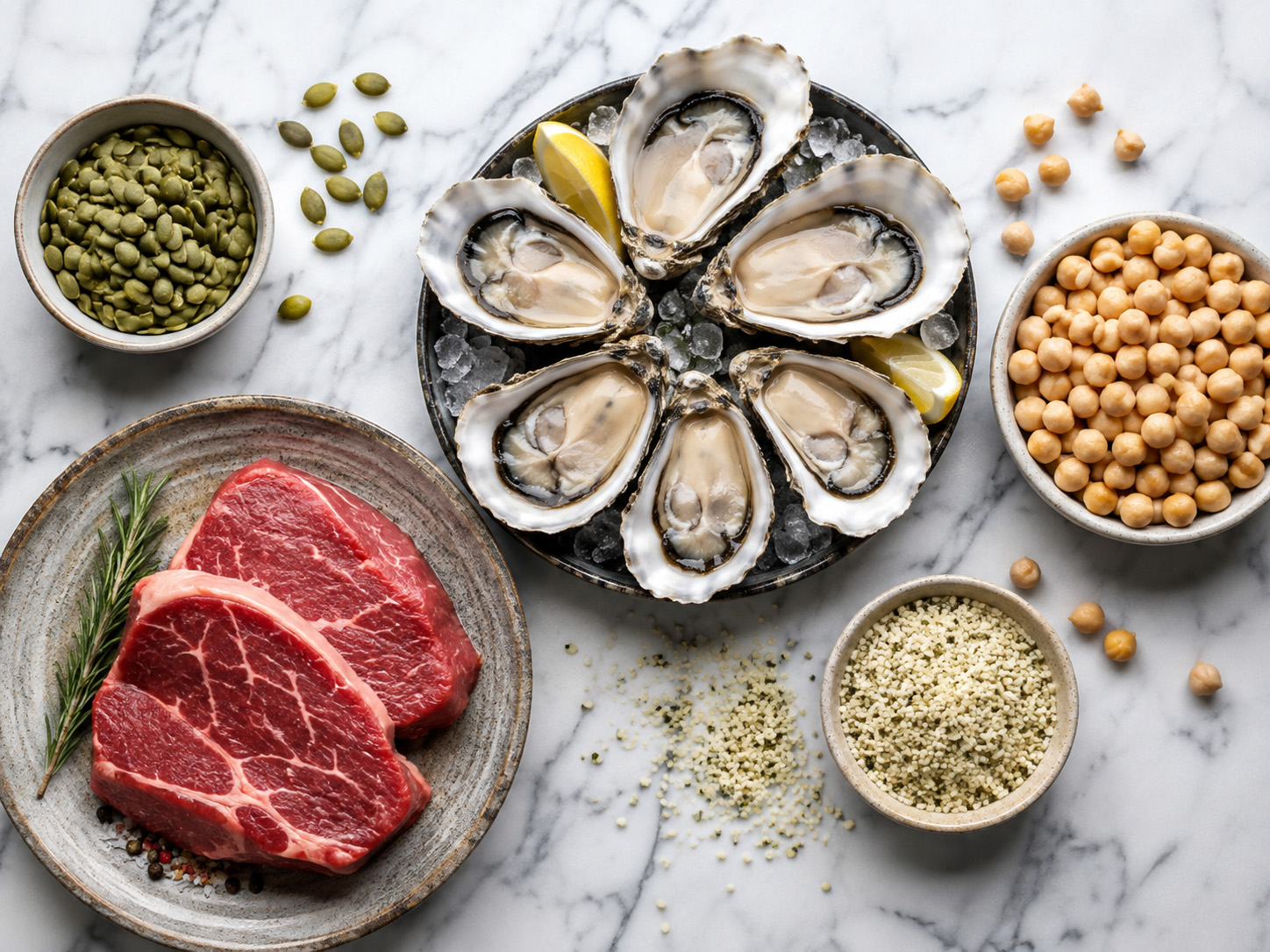
Whether or not you supplement, it is worth knowing which everyday foods are carrying zinc for you. These five are the top contributors worth building meals around:
- Pumpkin seeds: roughly 2.2 mg of zinc per ounce, and one of the best plant-based sources on the planet. It is exactly why Austrian pumpkin seed powder is the foundation of Purely-Zinc Plus, delivering that zinc in a whole food, ionic form rather than as an isolated salt. *
- Oysters: the single most concentrated food source of zinc that exists, at around 32 mg per 3-ounce serving, more than double an adult’s entire daily requirement in one sitting. *
- Grass-fed beef: about 7 mg per 3-ounce serving, along with highly bioavailable iron and B12 that plant sources cannot match. *
- Hemp seeds: roughly 3 mg per three tablespoons, making them one of the most concentrated plant sources next to pumpkin seeds. *
- Chickpeas: around 2.5 mg per cooked cup, a solid plant-based contributor that becomes even more absorbable when soaked or sprouted before cooking, which reduces the phytates that naturally block zinc uptake. *
The Bottom Line
Zinc will never have the name recognition of vitamin C or D, but its fingerprints are on your immune system’s ability to keep manufacturing new defenders in the thymus, your skin’s ability to heal, and the hormonal and reproductive resilience so many people are quietly struggling with today. A tablespoon of whole food zinc powder or a plate of oysters will not fix everything on its own, but overlooking this mineral may explain more of what feels off than most people realize.
References
Iovino, L., Wenger Cook, E., Dudakov, J.A. et al. Zinc is essential for T-cell development and thymic regeneration after immune injury. https://www.sciencedaily.com/releases/2022/03/220331185359.htm
Costello, L.C., Franklin, R.B. Growth Modulatory Role of Zinc in Prostate Cancer and Application to Cancer Therapeutics (2020). https://pmc.ncbi.nlm.nih.gov/articles/PMC7216164/
Wessells, K.R., Brown, K.H. Estimating the Global Prevalence of Zinc Deficiency (2012). https://www.ncbi.nlm.nih.gov/pmc/articles/PMC3510072/
Zhao, J. et al. Zinc levels in seminal plasma and their correlation with male infertility: A systematic review and meta-analysis (2016). https://www.ncbi.nlm.nih.gov/pmc/articles/PMC4773819/
Duncan, A. et al. Iatrogenic copper deficiency: Risks and cautions with zinc prescribing (2023). https://bpspubs.onlinelibrary.wiley.com/doi/10.1111/bcp.15749
Hemilä, H. Zinc lozenges and the common cold: a meta-analysis comparing zinc acetate and zinc gluconate (2017). https://journals.sagepub.com/doi/10.1177/2054270417694291
Elmoselhy, A.B. et al. Zinc may have a potential role in taste malfunctions treatment for COVID-19 patients (2020). https://www.oatext.com/zinc-may-have-a-potential-role-in-taste-malfunctions-treatment-for-covid-19-patients-journal-review-article.php
*These statements have not been evaluated by the Food and Drug Administration. These products are not intended to diagnose, treat, cure, or prevent any disease.
Explore our trending products:
-
Herbal-zzZs – Melatonin-Free Sleep Support
$31.99 — or subscribe to save 15% Add to cart -
Black Seed-Plus Capsules
$29.99 — or subscribe to save 15% Select options This product has multiple variants. The options may be chosen on the product page -
Purely-C Whole Food Vitamin C Complex | Capsules & Bulk Powder
Price range: $37.99 through $63.99 — or subscribe to save 15% Select options This product has multiple variants. The options may be chosen on the product page -
PurelyMin Magnesium Complex
$39.99 — or subscribe to save 15% Add to cart


