
Most of us think about toxins in terms of what we eat. Fewer of us think about what we’re rubbing into our skin, brushing onto our teeth, or spraying onto our necks and wrists every single day. But a sweeping 2026 lab analysis of 113 personal care and cleaning products found that 98% contained at least one chemical not listed on the label, and 85% contained undisclosed chemicals with known or suspected health hazards. On average, tested products contained 51 detectable chemicals, while their labels listed only 16.
Skin isn’t a barrier so much as a doorway. Whatever you put on it daily, day after day, gets absorbed into your bloodstream at some rate. Toothpaste, shampoo, skin cream, deodorant, and perfume are the five products most of us use before we’ve even had coffee, and they’re also five of the biggest sources of unnecessary chemical exposure in a typical routine. Here’s what to watch for in each, and what to reach for instead.
Toothpaste: The Lead Problem Nobody Talks About
You’d assume toothpaste is one of the more tightly regulated products in your bathroom. A 2025 independent analysis of 51 toothpaste brands found that 90% tested positive for lead, with subsets also containing arsenic (65%), mercury (47%), and cadmium (35%), including from well-known drugstore brands. None exceeded the FDA’s own lead limit, but the World Health Organization has been clear on this point for years: there is no known safe level of lead exposure, especially for children and pregnant women. These metals typically enter toothpaste through the mineral-based abrasives and colorants manufacturers use, not because anyone intends to put lead in your toothpaste.

What to look for instead: a short ingredient list built on plant oils rather than mined minerals and synthetic abrasives, and no glycerin, which some clinicians flag as a film-forming agent that can coat enamel and interfere with natural remineralization. OregaFresh Toothpaste is formulated without fluoride, glycerin, or synthetic additives, and is built instead on wild P73 oil of oregano, wild oil of sage, clove bud oil, birch tree extract, and eucalyptus oil; ingredients traditionally used to support gum tissue and a clean-feeling mouth, without the heavy-metal question mark.
Shampoo: The Preservative That Keeps Making Headlines
If you’ve followed the news, you may have seen the wave of class-action suits against major shampoo brands over the past two years, several centered on DMDM hydantoin, a preservative that works by slowly releasing small amounts of formaldehyde to keep water-based formulas from growing bacteria. The direct hair-loss claims in those suits remain scientifically unproven, but the ingredient is well documented as a trigger for allergic contact dermatitis and scalp irritation in sensitive users, and formaldehyde itself is classified as a known human carcinogen by the National Toxicology Program at higher, sustained exposure levels. It’s one ingredient among several: sulfates, synthetic fragrance, and parabens are common companions that make a “gentle, everyday” product worth a second look at the label.

ScalpClenz Shampoo skips synthetic preservatives and detergents entirely, built around black seed oil and a blend of spice and essential oils formulated to support scalp health and hair-root strength, whatever your scalp type.
Skin Cream: Reading Past “Dermatologist Recommended”
A “dermatologist recommended” label doesn’t guarantee a clean formula. Common lotion ingredients worth scrutinizing include petrolatum and propylene glycol (petroleum derivatives), BHT (a synthetic preservative), the paraben family (methyl-, propyl-, and ethylparaben), phenoxyethanol, synthetic fragrance, and dimethicone, a silicone that sits on skin rather than absorbing into it. None of these are automatically dangerous in small doses, but they add up across a routine that, research shows, includes an average of 12 to 16 personal care products applied daily by many women, a compounding exposure that’s easy to underestimate one product at a time.

Oreganol P73 Cream takes a different approach: it’s formulated with wild lavender oil, wild myrtle oil, propolis, royal jelly, and Canadian wildflower honey in a base of purified water and extra virgin olive oil. It’s food-grade, clean, and pure enough to be edible. Plus, it offers soothing support for everyday dryness, minor irritation, and rough patches, with the natural scent of real lavender and myrtle standing in for synthetic fragrance.
Deodorant: What’s Really Going on Under Your Arms
Underarm skin is thin, warm, and sits close to a cluster of lymph nodes, which is part of why so many people are rethinking what they put there. Conventional antiperspirants typically rely on aluminum-based compounds to physically plug sweat ducts, often alongside synthetic fragrance and propylene glycol. Current research from the National Cancer Institute has not established a causal link between aluminum antiperspirants and breast cancer, so that specific fear isn’t well supported, but aluminum compounds and synthetic fragrance are still common causes of underarm irritation and contact dermatitis, and many people simply prefer to let their bodies sweat and regulate temperature the way they’re designed to.
If you want to skip the store-bought aisle entirely, a natural deodorant takes minutes to make:

Simple Baking Soda Healthy Deodorant
- 3 tablespoons aluminum-free baking soda
- 6 tablespoons arrowroot powder
- 5–6 tablespoons melted coconut oil
- 8–10 drops of a single NAHS essential oil: Sagenol (wild sage), Rosemanol (wild rosemary), Lavenol (wild lavender), or Wild Oil of Myrtle
Whisk the baking soda and arrowroot powder together, then stir in the melted coconut oil until you get a smooth, spreadable paste. Add your essential oil of choice: sage and rosemary lean more herbal and grounding, lavender is calming, myrtle is fresh and slightly sweet and mix well. Spoon it into a small clean jar and let it firm up at room temperature for an hour or two. A pea-sized amount applied with clean fingertips is enough. Baking soda naturally neutralizes odor-causing bacteria, while arrowroot helps absorb moisture, so you get the function of a conventional deodorant without aluminum, parabens, or synthetic fragrance. If you have sensitive skin, start with less baking soda, since some people find it irritating in higher concentrations.
Perfume and Cologne: The Biggest Loophole in Cosmetics
Under current U.S. law, “fragrance” on an ingredient label can legally represent dozens of unlisted chemicals, protected as trade secrets. When Environmental Working Group chemists tested 17 name-brand fragrances, they found an average of 14 secret chemicals per product that weren’t disclosed anywhere on the packaging, including phthalates and other compounds associated with hormone disruption. Roughly a third of people report symptoms like headaches, breathing difficulty, or migraines triggered by fragrance exposure, and because perfume and cologne are sprayed directly onto skin, often at the wrists and neck, those unlisted chemicals sit in close, repeated contact with the body for hours.

The fix isn’t giving up scent; it’s changing the source. Single-note oils like NAHS’s Lavenol and Wild Oil of Myrtle offer a genuine, plant-based fragrance you can dab on pulse points, and products like Oreganol P73 Cream double as a lightly scented daily moisturizer thanks to its real lavender and myrtle oils, no synthetic “fragrance” blend required.
Small Swaps, Real Impact
You don’t have to overhaul your bathroom cabinet overnight. Start with the product you use most, whether that’s your toothpaste or your morning perfume, and replace it with a formula built on ingredients you can actually pronounce and, in most NAHS cases, could technically eat. Over months and years, those small swaps are what add up to a meaningfully lower chemical load, one honest label at a time.
*These statements have not been evaluated by the Food and Drug Administration. These products are not intended to diagnose, treat, cure, or prevent any disease.
Explore our trending products:
-
Herbal-zzZs – Melatonin-Free Sleep Support
$31.99 — or subscribe to save 15% Add to cart -
Black Seed-Plus Capsules
$29.99 — or subscribe to save 15% Select options This product has multiple variants. The options may be chosen on the product page -
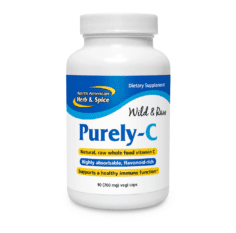
Purely-C Whole Food Vitamin C Complex | Capsules & Bulk Powder
Price range: $37.99 through $63.99 — or subscribe to save 15% Select options This product has multiple variants. The options may be chosen on the product page -
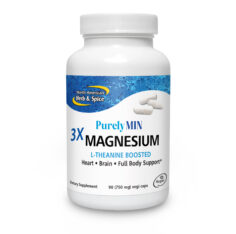
PurelyMin Magnesium Complex
$39.99 — or subscribe to save 15% Read more


