
Drive through the rolling hills of southeastern Austria in late September, and the fields look scattered with small, striped suns. Farmers move down the rows, split each pumpkin open, scoop out the seeds, and leave the flesh behind to feed next year’s soil. Here, the pumpkin isn’t grown for pie or porch decorations. It’s grown for what’s inside.
This is Styria, and its pumpkin is unlike any other on earth. The seeds are deep olive green; they have no hard shell, and the oil pressed from them is so dark and precious that locals call it “green gold.” It takes roughly 30 to 40 of these pumpkins to yield a single liter of oil. For generations, Styrian families have drizzled it over salads, soups, and even vanilla ice cream. Science is now catching up to what they have long known: this humble seed is one of the most nutrient-dense foods you can put on your table.
A Seed With a Long Medicinal Memory
Long before Austria made pumpkin seed oil famous, pumpkins were a staple of the Americas. Indigenous peoples used the seeds to support the kidneys, bladder, and digestion, and that knowledge was taken seriously enough that the United States Pharmacopoeia listed pumpkin seeds as an official remedy from 1863 to 1936 (EBSCO). Physicians of the late 1800s reached for them to support the urinary tract and soothe the stomach.
In Europe, the story took a different turn. In 1985, Germany’s Commission E, the country’s official panel on herbal medicine, recognized pumpkin seed for supporting urinary comfort in aging men (EBSCO). A seed once valued mainly for the gut had become one of Europe’s most trusted plant foods for the urinary system.

How Styria Got Its Remarkable Pumpkin
Styrian farmers have grown pumpkins for both flesh and seed for about 200 years, and the region was the first in Europe to cultivate pumpkins specifically for seed oil (Cucurbit Genetics Cooperative). But ordinary pumpkin seeds come wrapped in a tough, woody hull that had to be removed before pressing, a slow and costly job.
Then, around the 1880s, nature intervened. A spontaneous mutation appeared in a Styrian pumpkin patch: seeds with no hard hull at all, just a thin, dark green skin. Farmers noticed, saved those seeds, and selected for them year after year. Systematic breeding began in the 1930s, and the Styrian oil pumpkin, Cucurbita pepo var. styriaca, was born (Cucurbit Genetics Cooperative). Botanically, it is one of the youngest members of the pumpkin family (Fruhwirth & Hermetter, 2007).
That single genetic quirk changed everything. With no hull to strip away, the whole seed, including its pigment-rich green inner layer, goes straight to the press.

The Green Edge: Why Chlorophyll Matters
Pour a little Styrian pumpkin seed oil into a white dish and you’ll see something remarkable. In a thick layer it looks almost black-green; spread thin, it glows reddish. That color comes from protochlorophyll and chlorophyll pigments concentrated in the seed’s inner green layer, the very layer the Styrian mutation leaves exposed (Fruhwirth & Hermetter, 2007).
Compare that with the pale golden or orange pumpkin seed oils common on store shelves. Those are typically pressed from conventional hulled seeds and are often refined, a process that strips out pigments along with many of the delicate compounds that travel with them. The deep green color isn’t cosmetic. It’s a visible signature of a whole, minimally processed oil.
Why does chlorophyll matter? It’s the green pigment plants use to capture sunlight, and researchers have been studying what it does in the human gut. In a small pilot study at Oregon State University’s Linus Pauling Institute, volunteers who took natural chlorophyll alongside a trace amount of aflatoxin, a common food-borne mold toxin, absorbed less of that toxin (Jubert et al., 2009). The research is early, but it points to chlorophyll as a potential ally for the body’s natural defenses against everyday dietary toxins.
Those pigments are also delicate. Researchers found that just days of sunlight exposure destroys the oil’s characteristic color (Fruhwirth & Hermetter, 2007), which is why authentic Styrian oil is cold-pressed, kept away from light, and never used for high-heat cooking. Beyond chlorophyll, it delivers vitamin E, heart-supporting phytosterols, polyphenols, niacin (B3), potassium, and essential fatty acids.

For Men: Prostate, Urinary Flow, and Hair
The research on pumpkin seed and men’s health is among the most substantial in the botanical world. The GRANU study, a year-long randomized, placebo-controlled trial, followed 1,431 men aged 50 to 80 with age-related urinary complaints. After 12 months, 58.5 percent of men eating pumpkin seed reached a clinically meaningful improvement in their prostate symptom scores, compared with 47.3 percent on placebo (Vahlensieck et al., 2015).
In a separate Korean trial, men taking pumpkin seed oil saw improved symptom scores within three months and better urinary flow by six months, with no safety concerns (Hong et al., 2009).
Then there’s hair. Pumpkin seed oil appears to influence 5-alpha reductase, the enzyme that converts testosterone into DHT, the hormone most associated with thinning hair in men. In a 24-week double-blind trial of 76 men, those taking a 400 mg pumpkin seed oil supplement daily saw average hair counts rise 40 percent, versus 10 percent in the placebo group (Cho et al., 2014).

For Women: Menopause, Heart, and Bladder Support
Pumpkin seed oil isn’t just for men. It’s naturally rich in plant compounds that act as gentle phytoestrogens, which is why researchers tested it in postmenopausal women. In a 12-week placebo-controlled pilot study, women taking just 2 grams of pumpkin seed oil daily saw their “good” HDL cholesterol rise, their diastolic blood pressure fall, and their menopausal symptom scores improve, with fewer hot flushes, fewer headaches, and less joint discomfort driving the change (Gossell-Williams et al., 2011).
Bladder comfort matters to women, too. In a Japanese study of 45 adults, 12 weeks of pumpkin seed oil significantly improved scores for urinary urgency and frequency (Nishimura et al., 2014). That study used a different pumpkin species, which suggests the benefit runs through the whole pumpkin family, with the Styrian variety among the most prized.

The Powder: The Whole Seed, Made Easier
Oil captures the seed’s fat-soluble treasures. Styrian pumpkin seed powder captures the rest: protein, fiber, and a remarkable mineral load. Pumpkin seeds are one of the best plant sources of zinc, with a single ounce supplying about 20 percent of the Daily Value (NIH Office of Dietary Supplements). Zinc powers hundreds of enzymes and supports immune function, protein synthesis, skin repair, and healthy hormone activity. Men need 11 mg daily and women need 8 mg, yet 15 percent of American adults fall short of even the average requirement, and older adults are especially likely to run low (NIH Office of Dietary Supplements).
Here’s where the Styrian seed shines again. Because it has no woody hull, there’s no tough, fibrous shell for your digestive system to wrestle with. Finely milled into a powder, it’s far gentler on the stomach than a handful of whole seeds that must be chewed thoroughly to release their nutrients, and its minerals are more readily available to the body. It stirs easily into smoothies, yogurt, oatmeal, and soups, making daily use simple, which is exactly how the benefits build over time.

Bringing the Styrian Way Home
The Styrian way is refreshingly simple: enjoy the seed whole and unrefined, every day. Drizzle the green oil over a finished salad, soup, or roasted vegetables rather than cooking with it. Stir the powder into breakfast. Men gain a time-honored ally for the prostate, urinary flow, and hair. Women gain support through menopause, for heart health, and for bladder comfort. And everyone gains a dense, whole-food source of zinc, magnesium, vitamin E, and chlorophyll.
A pumpkin that lost its shell more than a century ago turned out to be one of nature’s most generous gifts. It’s worth making room for on your table.

NAHS Products of Interest
Pumpkinol is made exclusively from a special pumpkin grown in the Styrian region of Austria, where only the seeds are harvested. This cold-extracted, extra virgin oil is dense in whole-food vitamin E complex and pumpkin seed plant sterols that support healthy hormone function and healthy digestion, including a healthy hormone response for men, specifically for prostate health. Fortified with fennel, coriander, wild rosemary, and wild oregano oils for extra antioxidant value and freshness!
Directions: Take one to two tablespoons daily. Add to any food, salads, soups, or vegetables.
Purely-Zinc Plus, made with Styrian Austrian pumpkin seed powder, rice bran, and wild camu camu, is a whole-food zinc supplement. Rich in ionic zinc, it is also an excellent source of magnesium, manganese, copper, iron, protein, fiber, and phosphorus, plus B vitamins and vitamin C! One serving provides 40 percent of the daily zinc need for men and 52 percent for women.
Directions: Take at least two tablespoons daily in juice, milk, or smoothies. Mix into hot or cold cereal, soup, and entrées. Great in yogurt and desserts, and can be added to fortify baking recipes.
References
- Cho, Y. H., Lee, S. Y., Jeong, D. W., et al. (2014). Effect of pumpkin seed oil on hair growth in men with androgenetic alopecia: A randomized, double-blind, placebo-controlled trial. Evidence-Based Complementary and Alternative Medicine, 2014, 549721. https://doi.org/10.1155/2014/549721
- Cucurbit Genetics Cooperative. (2000). The origin and breeding of the hull-less seeded Styrian oil-pumpkin varieties in Austria. https://cucurbit.info/2000/07/the-origin-and-breeding-of-the-hull-less-seeded-styrian-oil-pumpkin-varieties-in-austria/
- EBSCO Research Starters. Pumpkin seed as a dietary supplement. https://www.ebsco.com/research-starters/nutrition-and-dietetics/pumpkin-seed-dietary-supplement
- Fruhwirth, G. O., & Hermetter, A. (2007). Seeds and oil of the Styrian oil pumpkin: Components and biological activities. European Journal of Lipid Science and Technology, 109(11), 1128–1140. https://doi.org/10.1002/ejlt.200700105
- Gossell-Williams, M., Hyde, C., Hunter, T., et al. (2011). Improvement in HDL cholesterol in postmenopausal women supplemented with pumpkin seed oil: Pilot study. Climacteric, 14(5), 558–564. https://doi.org/10.3109/13697137.2011.563882
- Hong, H., Kim, C. S., & Maeng, S. (2009). Effects of pumpkin seed oil and saw palmetto oil in Korean men with symptomatic benign prostatic hyperplasia. Nutrition Research and Practice, 3(4), 323–327. https://doi.org/10.4162/nrp.2009.3.4.323
- Jubert, C., Mata, J., Bench, G., et al. (2009). Effects of chlorophyll and chlorophyllin on low-dose aflatoxin B1 pharmacokinetics in human volunteers. Cancer Prevention Research, 2(12), 1015–1022. https://doi.org/10.1158/1940-6207.CAPR-09-0099
- National Institutes of Health, Office of Dietary Supplements. (2026). Zinc: Fact sheet for health professionals. https://ods.od.nih.gov/factsheets/Zinc-HealthProfessional/
- Nishimura, M., Ohkawara, T., Sato, H., Takeda, H., & Nishihira, J. (2014). Pumpkin seed oil extracted from Cucurbita maxima improves urinary disorder in human overactive bladder. Journal of Traditional and Complementary Medicine, 4(1), 72–74. https://doi.org/10.4103/2225-4110.124355
- Vahlensieck, W., Theurer, C., Pfitzer, E., et al. (2015). Effects of pumpkin seed in men with lower urinary tract symptoms due to benign prostatic hyperplasia in the one-year, randomized, placebo-controlled GRANU study. Urologia Internationalis, 94(3), 286–295. https://doi.org/10.1159/000362903
- Styrian oil pumpkin. https://en.wikipedia.org/wiki/Styrian_oil_pumpkin
These statements have not been evaluated by the Food and Drug Administration. These products are not intended to diagnose, treat, cure, or prevent any disease.
Explore our trending products:
-
Herbal-zzZs – Melatonin-Free Sleep Support
$34.99 — or subscribe to save 15% Add to cart -
Black Seed-Plus Capsules
$33.59 — or subscribe to save 15% Select options This product has multiple variants. The options may be chosen on the product page -
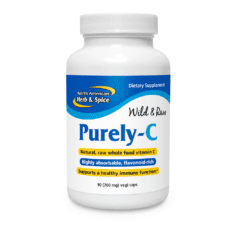
Purely-C Whole Food Vitamin C Complex | Capsules & Bulk Powder
Price range: $37.99 through $65.99 — or subscribe to save 15% Select options This product has multiple variants. The options may be chosen on the product page -
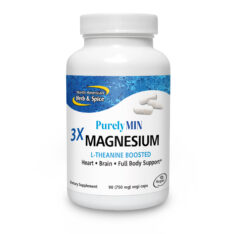
PurelyMin Magnesium Complex
$44.99 — or subscribe to save 15% Add to cart


