
Before your alarm even goes off, you’re awake. Mind racing. Chest tight. Heart already a little too quick. You haven’t checked your phone, made coffee, or said a single word to another human being, and somehow, you’re already stressed.
There’s a reason for that, and it’s not just “anxiety.” It has a name, a location in your body, and a fix backed by real research. It’s called cortisol, and once you understand what it’s doing to you every morning, you can finally do something about it.

What Cortisol Actually Is
Cortisol comes from your adrenal glands, two small, walnut-sized organs sitting right on top of your kidneys. Think of them as your body’s emergency response team. The moment your brain senses a threat, real or imagined, it radios down to the adrenals, and they flood your bloodstream with cortisol.
Cortisol itself isn’t the villain here. In short bursts, it’s exactly what gets you out of bed, sharpens your focus, and gives you the energy to handle whatever’s in front of you. The trouble starts when that alarm goes off too often, for too long, without enough quiet in between to recover.

Your Adrenal Glands Can’t Tell the Difference
Your adrenal glands don’t know the difference between a genuine emergency and everyday annoyance. A tense email from your boss. A traffic jam. A scroll through the news. An argument with your partner. As far as your body’s concerned, it’s all the same threat, and it responds the same way every time: by dumping cortisol into your system.
Some of the biggest cortisol triggers aren’t emotional at all. Something as ordinary as not drinking enough water can spike your cortisol reactivity by up to 55% during a stressful moment. In a study published in the Journal of Applied Physiology, participants who drank less than 1.5 liters (50.7 ounces) of fluid a day showed dramatically higher cortisol responses to a stress test than those who stayed properly hydrated, even though both groups reported feeling equally anxious going in. [1]
Your body can be running a full-blown stress response, and the trigger was never your boss, your inbox, or your morning news scroll. It was your water intake.

The 6 to 8 A.M. Spike You Didn’t Choose
Anxiety often hits hardest first thing in the morning, before you’ve even looked at your phone. That’s not in your head; it’s biology. Cortisol naturally starts climbing in the hour before you wake up and keeps rising for the first 30 to 45 minutes after your eyes open, a pattern researchers call the cortisol awakening response. For most people, that means cortisol is surging somewhere between roughly 6 and 8 a.m., jumping anywhere from 50% to well over 150% compared to levels right at waking. [2]
That spike is supposed to help you. It’s your body’s built-in alarm clock, priming you for the day ahead. But when your adrenal glands are already worn down from months of chronic stress, that same spike stops feeling like a wake-up call and starts feeling like a jolt of dread you can’t explain, and can’t seem to shake before breakfast.

Enter Ashwagandha: What the Studies Actually Show
Ashwagandha is an adaptogenic herb that’s been used in Ayurvedic medicine for thousands of years, and modern research is finally catching up to what traditional healers have known all along. Adaptogens work differently than stimulants or sedatives. They don’t force your body in one direction. They help it find balance, meeting your nervous system wherever it currently is.
In one of the foundational clinical trials, 64 adults with chronic stress took a high-concentration ashwagandha extract for 60 days. Compared to placebo, the ashwagandha group showed significantly lower stress scores and a measurable drop in serum cortisol. [3] A more recent meta-analysis pooling 15 studies and 873 participants confirmed the pattern, finding that ashwagandha significantly reduced both cortisol and perceived stress, with the strongest results showing up right around the 8-week mark. [4] That’s the number to remember. Ashwagandha isn’t a quick fix you feel overnight, so give it about two months of consistent use before you expect the full effect, and don’t quit at week three thinking it isn’t working.
Sleep is often the first thing to turn around. A meta-analysis of five randomized trials found ashwagandha meaningfully improved sleep quality, and again, the benefits were most pronounced in people who stuck with it for 8 weeks or longer. [5] Which makes total sense once you think about it. Calm the stress response down, and better sleep tends to follow right along with it, not the other way around.
Building Full Stress Resilience
Ashwagandha does the heaviest lifting, but your adrenal glands need more than one tool to actually recover. And wherever possible, we recommend whole food sources of these nutrients over synthetic, isolated versions. Our brand exists to make sure it is possible! Your body has spent millions of years learning to recognize food, not lab-made isolates.
Vitamin C is concentrated in the adrenal glands more than almost anywhere else in the body, and demand for it rises sharply during periods of stress. In a randomized, placebo-controlled trial, healthy adults given high-dose vitamin C for two weeks recovered from an acute stress test faster, showing quicker salivary cortisol recovery along with lower blood pressure and less subjective stress than the placebo group. [6]
Royal jelly has long been used as a hormonal strengthener, rich in B vitamins and unique compounds not found anywhere else in nature. In a randomized, double-blind, placebo-controlled trial, women taking royal jelly experienced a significant reduction in anxiety scores compared to placebo. [7]
Magnesium may be the most underrated player of all. It’s involved in hundreds of processes throughout the body, and it works directly to calm the nervous system, relax tense muscles, and blunt an overactive cortisol response. As a powerful electrolyte mineral, it also helps pull your body out of fatigue and rebuild real energy over time, rather than the jittery kind. In an 8-week clinical trial, magnesium supplementation combined with B6 produced a marked reduction in stress levels linked to lower serum cortisol. [8] And B vitamins pull real weight here too. In a 3-month randomized, placebo-controlled trial, adults under chronic work stress who took a high-dose B-complex reported significantly lower personal strain and less depressed, dejected mood than the placebo group. [9]

Our Highest Quality Support
For adaptogenic support, our Ashwagandha Capsules deliver a potent 10:1 extract fortified with raw royal jelly, formulated to support a healthy anti-stress response and adrenal adaptation. Shop Ashwagandha Capsules
If capsules aren’t your thing, Royal Oil combines whole food royal jelly with wild rosemary and raw Styrian pumpkinseed oil in an easy, great-tasting liquid, actually more like a pudding, ideal for supporting adrenal health any time of day, quickly. Shop Royal Oil
For the mineral side of the protocol, Purely Min 3X Magnesium combines three of the most bioavailable forms of magnesium with calming L-theanine, delivering the full-body relaxation and stress support your adrenals are asking for. Shop Purely Min 3X Magnesium
And for whole-food vitamin C, Purely C is sourced from wild camu camu berries, acerola cherries, and rose hips, providing the natural, bioflavonoid-rich complex your adrenal glands actually recognize. Shop Purely C
Your cortisol response was never broken. It’s just been running the same emergency drill for every stressor, real or imagined, for years without backup. Give your adrenal glands the raw materials they’re asking for, protect that 6 to 8 a.m. window instead of dreading it, and give the 8-week mark a real chance before you decide it’s not working. Resilience isn’t something you’re born with or without. It’s something you rebuild, one morning at a time.
References
- Kashi, D. et al. Habitual fluid intake and cortisol reactivity to acute stress. Journal of Applied Physiology (2025). https://www.ljmu.ac.uk/about-us/news/articles/2025/8/22/dehydration-and-stress-study
- Clow, A. & Law, R. Cortisol Awakening Response: Regulation and Functional Significance. Endocrine Reviews (2025). https://academic.oup.com/edrv/article/46/1/43/7739741
- Chandrasekhar, K., Kapoor, J., & Anishetty, S. A Prospective, Randomized Double-Blind, Placebo-Controlled Study of Safety and Efficacy of a High-Concentration Full-Spectrum Extract of Ashwagandha Root in Reducing Stress and Anxiety in Adults. Indian Journal of Psychological Medicine, 34(3), 255–262 (2012). https://doi.org/10.4103/0253-7176.106022
- Effects of Ashwagandha Supplements on Cortisol, Stress, and Anxiety Levels in Adults: A Systematic Review and Meta-Analysis. BJPsych Open (2025). https://www.cambridge.org/core/journals/bjpsych-open/article/effects-of-ashwagandha-supplements-on-cortisol-stress-and-anxiety-levels-in-adults-a-systematic-review-and-metaanalysis/6F2D7847C1F64707F2034A45FD6CF0C0
- Effect of Ashwagandha (Withania somnifera) extract on sleep: A systematic review and meta-analysis. PLOS ONE (2021). https://journals.plos.org/plosone/article?id=10.1371%2Fjournal.pone.0257843
- Brody, S., Preut, R., Schommer, K., & Schürmeyer, T.H. A randomized controlled trial of high dose ascorbic acid for reduction of blood pressure, cortisol, and subjective responses to psychological stress. Psychopharmacology, 159, 319–324 (2002). https://doi.org/10.1007/s00213-001-0929-6
- Asama, T. et al. Royal Jelly Supplementation Improves Menopausal Symptoms Such as Backache, Low Back Pain, and Anxiety in Postmenopausal Japanese Women. Evidence-Based Complementary and Alternative Medicine (2018). https://www.ncbi.nlm.nih.gov/pmc/articles/PMC5949161/
- Pouteau, E. et al. Superiority of magnesium and vitamin B6 over magnesium alone on severe stress in healthy adults with low magnesemia: A randomized, single-blind clinical trial. PLOS ONE (2018). https://www.ncbi.nlm.nih.gov/pmc/articles/PMC6298677/
- Stough, C., Scholey, A., Lloyd, J., Spong, J., Myers, S., & Downey, L.A. The effect of 90 day administration of a high dose vitamin B-complex on work stress. Human Psychopharmacology: Clinical and Experimental, 26(7), 470–476 (2011). https://doi.org/10.1002/hup.1229
*These statements have not been evaluated by the Food and Drug Administration. These products are not intended to diagnose, treat, cure, or prevent any disease.
Explore our trending products:
-
Herbal-zzZs – Melatonin-Free Sleep Support
$31.99 — or subscribe to save 15% Add to cart -
Black Seed-Plus Capsules
$29.99 — or subscribe to save 15% Select options This product has multiple variants. The options may be chosen on the product page -
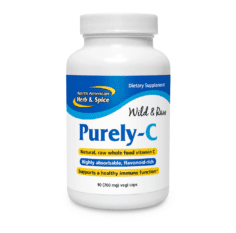
Purely-C Whole Food Vitamin C Complex | Capsules & Bulk Powder
Price range: $37.99 through $63.99 — or subscribe to save 15% Select options This product has multiple variants. The options may be chosen on the product page -
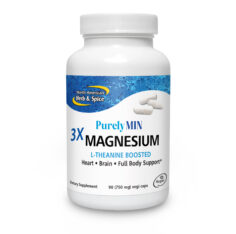
PurelyMin Magnesium Complex
$39.99 — or subscribe to save 15% Add to cart


