
The Invisible Roommate You Never Signed Up For
Right now, there could be something living in your walls that is quietly draining your energy, fogging your thinking, and getting blamed on everything except its actual cause. That something is mold.
Mold spores are everywhere. They travel through open windows, ride in on your shoes, hitch a ride on your pet’s fur, and drift in through the HVAC system. None of that is unusual on its own. Mold only becomes a problem when those spores land somewhere damp and decide to stay: behind drywall after a slow leak, under carpet padding, inside a poorly sealed window frame, or in the ductwork of a system that never fully dries out.
Here is the part that makes this genuinely sneaky: you often cannot see it and you often cannot smell it until it has already spread. By the time there is a visible patch or a musty odor, the growth has usually been established for a while.

Why It Hides in Plain Sight for Years
This is the section that explains why so many people go undiagnosed. Mold related symptoms overlap heavily with a long list of far more commonly diagnosed conditions, so doctors and patients alike tend to chase other explanations first.
The Institute of Medicine reviewed the evidence in 2004 and found it strong enough to link indoor mold exposure to upper respiratory symptoms, coughing, and wheezing in otherwise healthy people, worsened asthma symptoms in people who already have asthma, and hypersensitivity pneumonitis in those susceptible to it. The World Health Organization followed in 2009 with its own guidelines on dampness and mold in indoor spaces. These are not fringe claims. They are findings from major public health bodies.
Some researchers have gone further, describing a pattern of symptoms in chronically exposed individuals that overlaps significantly with myalgic encephalomyelitis and chronic fatigue syndrome (ME/CFS), including profound fatigue, cognitive difficulties, post exertional symptom worsening, sleep disruption, and pain. It is worth being honest here: this specific framework, sometimes called Chronic Inflammatory Response Syndrome, is not universally accepted in mainstream medicine, and the evidence behind its diagnostic criteria and treatment protocols is still debated among clinicians. What is documented and not dismissed by researchers on either side of that debate, is that people with significant biotoxin exposure sometimes present with symptoms that look remarkably like ME/CFS.
One older but frequently cited study looked at 112 patients with chronic illness and tested their urine for specific mycotoxin markers, finding a striking association between mycotoxin presence and chronic fatigue symptoms in that population. It is a small, imperfect body of research, but it is exactly the kind of clue that gets missed when fatigue gets chalked up to stress, poor sleep, or “just getting older.”

The Symptom List That Rarely Points to Mold First
If you brought these symptoms to a doctor one at a time, mold would probably not be the first thing on anyone’s mind:
- Persistent fatigue that does not improve with rest
- Brain fog, poor concentration, and short-term memory lapses
- Sinus congestion, postnasal drip, or a chronic sore throat
- Headaches that seem to have no clear trigger
- Watery or itchy eyes
- Skin irritation or unexplained rashes
- Coughing, wheezing, or a sense of tightness in the chest
- Worsening of pre-existing asthma or allergies
The CDC has been direct about this: exposure to damp and moldy environments can cause a wide range of health effects, or none at all, depending heavily on the individual. People sensitive to mold may experience a stuffy nose, sore throat, coughing, wheezing, burning eyes, or a skin rash, and those with asthma or mold allergies can have more severe reactions. That variability is precisely why it is so easy to miss. Two people in the same moldy house can have completely different experiences.

Keeping Mold Out in the First Place
Prevention comes down to one word: moisture. Mold cannot establish itself without it, so controlling humidity and water intrusion is the single highest leverage thing you can do.
- Keep indoor humidity between 30 and 50 percent, and use a hygrometer if you are not sure what your home is sitting at
- Fix leaks fast. A small drip under a sink can turn into a colony behind the cabinet wall within 48 hours
- Run exhaust fans in bathrooms and kitchens, and actually use them, not just install them
- Check under carpets, behind furniture pushed against exterior walls, and inside closets that back up to plumbing
- Clean and inspect HVAC systems and dryer vents on a regular schedule
- After any flooding or water event, dry the area completely within one to two days
- Improve airflow in naturally damp spaces like basements and crawl spaces
None of these steps require special equipment or an inspector. They just require paying attention to the parts of the house nobody looks at very often.

Supporting Your Body While You Address Your Environment
Fixing the environment is the foundation. But there is a reasonable, well-established case for also giving your body’s own defenses some support while you do that work, and this is where certain plant compounds have drawn real scientific interest.
Carvacrol, the primary active compound in oregano essential oil, has been studied extensively in laboratory settings for supporting microbial balance.
To be clear about what this research does and does not show: these are laboratory and in vitro findings, not clinical evidence that any product treats or cures mold illness in humans, and no supplement is a substitute for identifying and removing an actual mold source in your home. What the research does support is a well-documented, science backed relationship between oregano’s active compounds and microbial balance, which is exactly why it has earned a place in traditional wellness practices for centuries.
Alongside microbial balance, many people are also interested in supporting the body’s own detoxification pathways, the natural systems your liver, kidneys, and lymphatic system rely on every day.
The Bottom Line
Mold is common, often invisible, and frequently mistaken for something else entirely. If you have been dealing with fatigue or brain fog that nobody can quite explain, it is worth asking a question most people never think to ask: what is going on inside my walls? Between moisture control, quick response to leaks, and giving your body’s natural systems some support, you have more influence over this than you might think.
References
- CDC, NIOSH. Basic facts about mold and health effects. cdc.gov/mold-health
- Institute of Medicine (IOM). Damp Indoor Spaces and Health, 2004. National Academies Press.
- World Health Organization. WHO Guidelines for Indoor Air Quality: Dampness and Mould, 2009.
- CDC, NIOSH. Mold and respiratory health problems. cdc.gov/niosh/mold
- Journal of Translational Medicine (2025). Environmental exposures and water-damaged buildings as potential triggers in ME/CFS-like presentations.
- Case study cohort (2012, published in Toxins). Urinary mycotoxin markers in patients with chronic fatigue symptoms.
- Li, B. et al. Microbial activity of Origanum vulgare L. essential oil and its effects on fungal gene expression. PMC.
- Activity of Aromatic Plants of the Lamiaceae Family in Bread. PMC (Aspergillus niger and Penicillium inhibition data).
- Evaluation of the Effects of Carvacrol-Rich Essential Oils on Alternaria and Fusarium. MDPI.
- Dorman, H.J.D., Deans, S.G. Microbial agents from plants: activity of plant volatile oils. Journal of Applied Microbiology, 88:308-316, 2000.
*These statements have not been evaluated by the Food and Drug Administration. These products are not intended to diagnose, treat, cure, or prevent any disease.
Explore our trending products:
-
Herbal-zzZs – Melatonin-Free Sleep Support
$31.99 — or subscribe to save 15% Add to cart -
Black Seed-Plus Capsules
$29.99 — or subscribe to save 15% Select options This product has multiple variants. The options may be chosen on the product page -
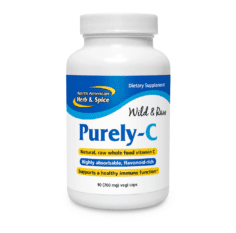
Purely-C Whole Food Vitamin C Complex | Capsules & Bulk Powder
Price range: $37.99 through $63.99 — or subscribe to save 15% Select options This product has multiple variants. The options may be chosen on the product page -
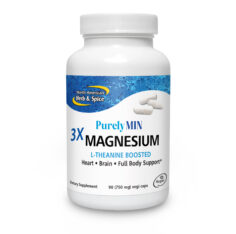
PurelyMin Magnesium Complex
$39.99 — or subscribe to save 15% Read more


