
Important: This article discusses published scientific research on the compound carvacrol as studied in laboratory settings. The studies referenced examined isolated carvacrol and do not establish effects of any dietary supplement product in humans. Any dietary supplement products mentioned are not intended to diagnose, treat, cure, or prevent any disease. Consult a qualified healthcare professional before using any supplement, particularly if you are pregnant, nursing, taking medication, or have a medical condition.
Oregano oil has become one of the most talked-about natural supplements in the health world, and for good reason. But if you ask most people why oregano oil works, they will give you a one-word answer: carvacrol. While that answer is not wrong, it is dangerously incomplete. The truth about what makes oregano oil interesting is more nuanced, more interesting, and more important than most brands want you to know. Understanding it could change the way you shop for oregano oil forever.

What Is Carvacrol?
Carvacrol is a monoterpenoid phenol, a naturally occurring organic compound found in the essential oils of several aromatic plants, most notably oregano (Origanum vulgare), thyme, and wild bergamot. It is the compound primarily responsible for oregano’s distinctive warm, pungent aroma and sharp taste.
But carvacrol is far more than a flavor molecule. It has been the subject of hundreds of published studies investigating its biological activity, and the findings are remarkable.

What the Research Shows
Carvacrol has been studied for its activity against various microorganisms in laboratory research, and these laboratory findings are among the most well-documented in the plant compound literature. A study published in the Journal of Applied Microbiology found that, in laboratory settings, carvacrol disrupts bacterial cell membranes, targeting the lipid fractions and proteins of cell structures in both Gram-positive and Gram-negative bacteria. The researchers demonstrated that carvacrol was active at remarkably low concentrations, particularly in acidic environments.[1]
Beyond this, carvacrol has been the subject of laboratory research examining its effect on biofilm formation. Biofilms are the protective shields that colonies of bacteria build around themselves, making them up to 1,000 times more resistant to antimicrobial agents. Research published in PLoS ONE showed that, in laboratory conditions, carvacrol inhibited biofilm formation in multiple bacterial species at sub-lethal concentrations, meaning it disrupted bacterial communication and colony-building without needing to reach levels that would kill cells outright.[2] These findings come from controlled laboratory studies of the isolated compound and do not establish effects of any dietary supplement product.
Carvacrol has been investigated in research related to the body’s inflammatory response. A study published in Molecular Medicine Reports examined carvacrol’s effect on the NF-κB signaling pathway, one of the body’s central inflammatory cascades. In that laboratory research, carvacrol was observed to influence nitric oxide and prostaglandin E2 production and to affect expression of iNOS and COX-2, key enzymes involved in the inflammatory response.[3] These findings come from controlled in vitro laboratory studies of the isolated compound and do not establish the effects of any dietary supplement product.
And a comprehensive review in Antibiotics (2023) catalogued the breadth of laboratory research on carvacrol, while noting that high concentrations above naturally occurring levels can exhibit cytotoxicity, underscoring the importance of proper formulation and dosing.[4]
Note: This research is presented to educate the reader about the actual research performed on the isolated compound carvacrol, in the context of in vitro studies. These findings do not establish the effects of any dietary supplement product.
More Carvacrol Is Not Always Better
This is where the oregano oil industry gets it wrong. Many brands have turned carvacrol percentage into a marketing arms race, advertising 90%, 95%, even 99% carvacrol content as though higher numbers automatically mean a superior product. What they do not tell you is that at excessively high concentrations, carvacrol becomes toxic to human cells.
Research has shown that high concentrations of carvacrol exhibit cytotoxicity and genotoxicity, meaning they can damage cells and DNA. A toxicological review published in Food Research International confirmed that while low doses are well-tolerated in both animal models and human trials, high doses present real risks.[5] The median lethal dose in rats is 810 mg/kg of body weight by oral administration. At elevated concentrations, carvacrol can induce apoptosis, which is cell death, in human liver cells.

The highest naturally occurring carvacrol percentage found in wild oregano is approximately 84%. Anything significantly above that is either synthetically enhanced or isolated from its natural plant matrix, both of which compromise the safety and synergistic value of the oil.
This is an important distinction. A truly wild oregano oil at 84% carvacrol is a very different product from a lab-manufactured isolate pushed to 95% or higher. The former retains its full complement of naturally co-occurring plant compounds. The latter is essentially a pharmaceutical-grade chemical.
Why Full-Spectrum Matters More Than Carvacrol Alone
Here is what the carvacrol-focused brands do not want to discuss: oregano oil is not a single-compound supplement. A truly wild, full-spectrum botanical extract contains over 30 distinct plant chemicals, including thymol, rosmarinic acid, p-cymene, gamma-terpinene, beta-caryophyllene, linalool, terpinen-4-ol, and dozens of other terpenes, phenols, and flavonoids.

These compounds do not just ride along passively. They occur together naturally as part of the plant’s full chemical profile. Botanical research has long recognized that whole-plant botanical extracts contain complex mixtures of constituents, and many botanical traditions value this complexity rather than seeking to isolate a single compound. Thymol, for instance, is another well-studied phenol that occurs alongside carvacrol in oregano. The full spectrum is what makes oregano oil a complex, balanced, full-spectrum botanical extract rather than a single-chemical product.
Most commercial oregano oil brands contain between 10 and 15 identifiable plant chemicals. That is less than half the diversity of a truly wild, full-spectrum oil. When you strip oregano down to one or two compounds, you lose the very thing that makes it distinctive.

Oreganol P73: 30+ Plant Chemicals from Wild Mountain Oregano
Oreganol P73 from North American Herb & Spice is the original wild oregano oil, handpicked from pristine, unpolluted Mediterranean mountains and produced by old-fashioned steam distillation. It is made from the top oregano strains and delivers a full-spectrum profile of over 30 naturally occurring plant chemicals. That is double to triple the number found in the most popular commercial brands.
This diversity is what sets it apart. Oreganol P73 is not engineered for the highest possible carvacrol number. It is crafted to preserve the complete chemical fingerprint of wild oregano as it occurs in nature, with a balanced carvacrol level and low thymol content, which is a sign of quality and a higher safety profile. It is the only truly unprocessed, full-spectrum wild oregano oil available.
Explore Oreganol P73 Super Strength Gelcaps.

OregaUltra: When You Need Maximum Carvacrol, Naturally
There are times when maximum potency is called for. For those situations, North American Herb & Spice offers OregaUltra, the world’s only truly wild, 100% Mediterranean mountain high-carvacrol oregano oil at 84%, the highest level found in nature. This is not synthetic carvacrol added to a base oil. It is a rare, premium oregano oil naturally expressing the upper limit of what wild oregano can produce.
OregaUltra is free of synthetic carvacrol, which taints many other high-carvacrol products on the market. It is designed for situations where maximum naturally occurring potency is preferred, while still delivering the integrity of a genuinely wild-source oil. Follow the directions on the label.
The Bottom Line
Carvacrol is a genuinely powerful compound with decades of research behind it. But it is one piece of a much larger puzzle. Chasing the highest carvacrol percentage without regard for full-spectrum chemistry, natural sourcing, and proper dosing is not just misguided. It can be counterproductive and potentially harmful. The best oregano oil is not the one with the biggest number on the label. It is the one that delivers the full complexity of wild oregano as nature intended, with the right balance of carvacrol, complementary terpenes, and phenols occurring together as they have for centuries.
References
[1] Ait-Ouazzou A, et al. New insights in mechanisms of bacterial inactivation by carvacrol. Journal of Applied Microbiology. 2013;114(2):173-185. [2] Burt SA, et al. The Natural Antimicrobial Carvacrol Inhibits Quorum Sensing in Chromobacterium violaceum and Reduces Bacterial Biofilm Formation at Sub-Lethal Concentrations. PLoS ONE. 2014;9(4):e93414. [3] Carvacrol ameliorates inflammatory response in interleukin 1β-stimulated human chondrocytes. Molecular Medicine Reports. 2018;17(3):3987-3992. [4] Maczka W, et al. Carvacrol: A Natural Phenolic Compound with Antimicrobial Properties. Antibiotics. 2023;12(5):824. [5] Carvacrol as a food additive: Toxicological aspects. Food Research International. 2024;196:115076.These statements have not been evaluated by the Food and Drug Administration. These products are not intended to diagnose, treat, cure, or prevent any disease.
Explore our trending products:
-
Herbal-zzZs – Melatonin-Free Sleep Support
$31.99 — or subscribe to save 15% Add to cart -
Black Seed-Plus Capsules
$29.99 — or subscribe to save 15% Select options This product has multiple variants. The options may be chosen on the product page -
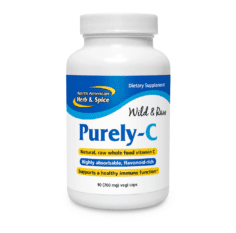
Purely-C Whole Food Vitamin C Complex | Capsules & Bulk Powder
Price range: $37.99 through $63.99 — or subscribe to save 15% Select options This product has multiple variants. The options may be chosen on the product page -
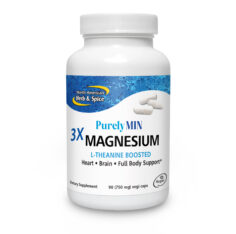
PurelyMin Magnesium Complex
$39.99 — or subscribe to save 15% Read more


