
Here’s a stat that should stop every man under 40 in his tracks: a young man today may have 20–30% less testosterone than his father did at the same age.
That’s not a guess. That’s what decades of clinical data tell us. And it’s not just testosterone. Sperm counts in Western men have fallen by more than 50% since the early 1970s, with the rate of decline accelerating in the 21st century. Something has gone fundamentally wrong with male hormonal health, and if you’re a man between 18 and 40, you’re living in the middle of it.

The Numbers Don’t Lie
The Massachusetts Male Aging Study (MMAS) tracked testosterone levels from 1987 to 2004 and found that men in 2004 had levels approximately 17% lower than men of the same age in 1987, a decline of roughly 1% per year across all age groups. A 2022 Israeli study of 102,334 men confirmed the trend is continuing, with significant age-independent testosterone decline between 2006 and 2019 that couldn’t be explained by obesity alone. And U.S. NHANES data from 1999 to 2016 showed declining testosterone in men aged 15–39, even among those with a normal BMI.
To put it plainly: the average testosterone level for an American man in the 1970s was roughly 600–650 ng/dL. Today’s average hovers around 400–450 ng/dL.
Sperm counts tell the same story. A landmark 2017 meta-analysis in Human Reproduction Update found that sperm concentration in Western men dropped 52.4% between 1973 and 2011. The 2022 follow-up showed a 62.3% decline in total sperm count, with the rate of decline doubling after 2000.
What’s Driving This Decline?
This isn’t the result of one single factor. It’s a collision of lifestyle changes, dietary shifts, and environmental exposures.

Obesity and Inactivity
In the early 1960s, roughly 13% of American adults were obese. By 2020, that number tripled to over 42%, with average male BMI rising from 25.7 to 30.0. Body fat contains aromatase, an enzyme that converts testosterone into estrogen, creating a vicious cycle where low testosterone promotes fat storage and excess fat further suppresses testosterone. Compound that with the fact that the average adult now spends 7+ hours per day sedentary, and you’ve lost two of the most reliable natural supports for testosterone: lean body composition and regular intense exercise.
Less Sunlight
Most men spend the vast majority of daylight hours indoors, which directly impacts vitamin D synthesis. Vitamin D receptors are present in the testes, and research has linked deficiency with lower testosterone levels. An estimated 42% of American adults are vitamin D deficient.

The Modern Diet Problem
Seed oils (soybean, corn, canola, cottonseed) now dominate the food supply, loaded with omega-6 polyunsaturated fatty acids. The omega-6 to omega-3 ratio has skyrocketed from roughly 1:1 in ancestral diets to as high as 20:1 today, and research has linked higher polyunsaturated fat intake with lower testosterone. Soy-derived ingredients are everywhere in processed foods, and while human clinical data on soy’s direct hormonal effects is mixed, animal studies have demonstrated that phytoestrogen-rich diets can lower androgen levels. Meanwhile, intake of zinc, magnesium, and other nutrients critical for testosterone production has plummeted as whole food consumption has dropped.
What’s in Your Underwear
Dr. Ahmed Shafik at Cairo University found that men wearing a polyester scrotal sling for 12 months all became azoospermic (zero sperm) after an average of 140 days. Sperm counts returned to normal after removal, and all couples who wanted to conceive did. In a separate animal study, dogs wearing loose polyester underpants for 24 months showed significant decreases in sperm count and testicular degeneration. Today, over 60% of global clothing is synthetic, and the phthalates and BPA used in polyester production are known endocrine disruptors that leach through skin contact, sweat, and heat.
The Microplastic Crisis
In 2024, University of New Mexico researchers found microplastics in 100% of human testicular tissue tested, at nearly three times the concentration found in dogs. Higher PVC concentrations correlated directly with lower sperm counts in the animal samples. A 2024 study in Ecotoxicology and Environmental Safety found that microplastics can absorb testosterone molecules, reducing the hormone’s bioavailability. A 2023 Chinese study confirmed microplastics in over 75% of human semen samples tested.
Five Supplements That Support Healthy Testosterone Levels*

Royal Jelly – The Hive’s Hormonal Powerhouse
Royal jelly is one of the most nutrient-dense substances found in nature, packed with amino acids, fatty acids (including the unique 10-HDA), B vitamins, and trace minerals. It’s the exclusive food of the queen bee, and it’s what transforms an ordinary larva into a reproductive powerhouse.
For men, royal jelly is notable because of the nutritional support it provides to the body’s endocrine system. Its unique fatty acid profile and micronutrient density support the body’s natural hormone production processes.*
The clinical evidence is promising. In a human study published in the Thi-Qar Medical Journal, researchers treated 83 infertile men with varying doses of royal jelly (25mg, 50mg, and 100mg) over three months, with a control group receiving pure honey. After 90 days, the men receiving royal jelly showed significant improvements in active sperm motility, testosterone levels, and luteinizing hormone (LH) levels. The treatment produced no side effects. That kind of result from a human trial, not a petri dish, not a rat model, is exactly why royal jelly deserves a closer look.*

Vitamin E – The Antioxidant Your Reproductive System Craves
Vitamin E protects cells from oxidative stress, one of the primary mechanisms through which environmental toxins, microplastics, and endocrine disruptors damage reproductive tissue. It neutralizes free radicals and supports cell membrane integrity throughout the reproductive system.* In a world of constant oxidative assault from processed foods, pollution, and plastic exposure, adequate vitamin E is essential.*
Vitamin D – The Sunshine Hormone Men Aren’t Getting Enough Of
Vitamin D functions as a hormone in the body, and studies suggest that men with sufficient vitamin D status tend to have higher testosterone compared to deficient men.* If you’re not getting 15–20 minutes of direct midday sun regularly, supplementation is one of the most straightforward ways to support your hormonal baseline.*

Beef Liver – Nature’s Multivitamin for Men
Our grandfathers ate organ meats. We don’t. Beef liver is loaded with bioavailable vitamin A, B vitamins (especially B12), zinc, iron, copper, and CoQ10. Zinc is directly involved in testosterone synthesis, and deficiency is associated with lower levels.* If eating liver isn’t realistic, desiccated beef liver capsules deliver the same nutritional profile.*

Wild-Caught Salmon – Omega-3s to Rebalance Your Fats
Salmon is rich in EPA and DHA, the long-chain omega-3s that support healthy inflammatory response throughout the body, including reproductive tissue.* If the modern diet has flooded your body with omega-6s from seed oils, getting your omega-3 intake up is one of the simplest, most impactful steps you can take.*
Take Control of What You Can
The modern world wasn’t designed with your testosterone in mind. But understanding what’s working against you is the first step toward doing something about it. Move more. Eat whole foods. Get sunlight. Ditch the polyester. And fill the nutritional gaps that the modern diet leaves behind.
Your hormones are listening to every signal your environment sends. Start sending better ones.
References
- Travison TG, et al. A population-level decline in serum testosterone levels in American men. J Clin Endocrinol Metab. 2007;92(1):196-202. https://doi.org/10.1210/jc.2006-1375
- Levine H, et al. Temporal trends in sperm count: a systematic review and meta-regression analysis of samples collected globally in the 20th and 21st centuries. Hum Reprod Update. 2023;29(2):157-176. https://doi.org/10.1093/humupd/dmac035
- Levine H, et al. Temporal trends in sperm count: a systematic review and meta-regression analysis. Hum Reprod Update. 2017;23(6):646-659. https://doi.org/10.1093/humupd/dmx022
- Shafik A. Contraceptive efficacy of polyester-induced azoospermia in normal men. Contraception. 1992;45(5):439-451. https://pubmed.ncbi.nlm.nih.gov/1623716/
- Hu CJ, et al. Microplastic presence in dog and human testis and its potential association with sperm count. Toxicol Sci. 2024;200(2):235-240. https://doi.org/10.1093/toxsci/kfae060
- Shtarkshall R, et al. Secular trends in testosterone: findings from a large state-mandate care provider. PLOS ONE. 2020. https://pmc.ncbi.nlm.nih.gov/articles/PMC7063751/
- Mohssin SA, Al-Sanafi AE, Abdulla SM. Effect of Royal Jelly on male Infertility. Thi-Qar Medical Journal. 2007;1(1). https://jmed.utq.edu.iq/index.php/main/article/view/309
*These statements have not been evaluated by the Food and Drug Administration. These products are not intended to diagnose, treat, cure, or prevent any disease. Consult your healthcare provider before starting any new supplement regimen.
Explore our trending products:
-
Herbal-zzZs – Melatonin-Free Sleep Support
$31.99 — or subscribe to save 15% Add to cart -
Black Seed-Plus Capsules
$29.99 — or subscribe to save 15% Select options This product has multiple variants. The options may be chosen on the product page -
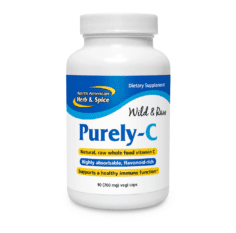
Purely-C Whole Food Vitamin C Complex | Capsules & Bulk Powder
Price range: $37.99 through $63.99 — or subscribe to save 15% Select options This product has multiple variants. The options may be chosen on the product page -
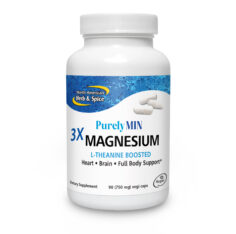
PurelyMin Magnesium Complex
$39.99 — or subscribe to save 15% Add to cart


