
The average human head contains about 100,000 hair follicles, and losing 50 to 100 strands per day is completely normal. Fun fact: blondes tend to have the most follicles at around 150,000, while redheads have the fewest at roughly 90,000. But when your shower drain starts collecting enough hair to knit a small animal, something deeper is going on. An estimated 80 million Americans, roughly 50 million men and 30 million women, experience some degree of hair loss. By age 50, 85% of men will have noticeably thinner hair, and 40% of women will experience visible thinning as well.
The frustrating part? Most people treat hair loss like a cosmetic problem, reaching for thickening shampoos and volumizing sprays while ignoring what is actually going on inside their bodies. The truth is that hair loss is almost always a symptom, not a diagnosis. And the real causes are the ones no one seems to talk about.

Male Pattern Baldness: The Genetic Factor
Let’s address the elephant in the room first. Androgenetic alopecia, commonly known as male pattern baldness, accounts for roughly 95% of hair loss in men. It is driven by a genetic sensitivity to dihydrotestosterone (DHT), a hormone derived from testosterone that causes susceptible hair follicles to shrink over time until they stop producing visible hair altogether. It typically follows a recognizable pattern: a receding hairline and thinning at the crown.
Here is what makes this type different from the rest: it is primarily genetic and hormonal, which means it is the most difficult form of hair loss to fully reverse. Once a follicle has been miniaturized by DHT for long enough, it may not recover. That said, slowing the process and supporting the health of remaining follicles is very much possible, especially when you understand the nutritional and lifestyle factors that accelerate it.
Women can also experience androgenetic alopecia, though it typically presents as thinning across the scalp rather than a receding hairline. It is most common after menopause when estrogen levels decline, and the relative influence of androgens increases.

The Nutrient Deficiencies Behind the Thinning
Beyond genetics, the most under-discussed driver of hair loss in both men and women is nutrient deficiency. A comprehensive review published in Dermatology and Therapy examined the role of vitamins and minerals in non-scarring hair loss and found that deficiencies in vitamin D, iron, zinc, and B vitamins were consistently associated with increased hair shedding and impaired regrowth.[1]
Iron is one of the most common culprits, especially in women. Hair follicle cells are among the most rapidly dividing cells in the body, and they have an enormous demand for iron. When ferritin levels drop, your body triages available iron toward vital organs, and hair is the first thing sacrificed. That’s why hair loss is one of the earliest visible signs of iron deficiency, often appearing well before full-blown anemia.
Vitamin D plays a critical role in the hair follicle growth cycle. An estimated 42% of American adults are vitamin D deficient, and research has repeatedly linked low vitamin D levels to both hair shedding and alopecia areata (patchy autoimmune hair loss).
Zinc is essential for hair tissue growth and repair, and it helps keep the oil glands around follicles functioning properly. Zinc deficiency is associated with hair shedding and has been documented in patients with various forms of alopecia.
B vitamins, especially B12, folate (B9), and biotin (B7), are required for healthy cell division and the production of red blood cells that carry oxygen and nutrients to the scalp. Deficiency in any of these can contribute to hair thinning and premature graying.

The Thyroid Connection: Why Iodine Matters More Than You Think
Here is one that rarely gets the attention it deserves: thyroid dysfunction is one of the most common medical causes of hair loss, and iodine deficiency is a leading cause of thyroid dysfunction worldwide. Both hypothyroidism (underactive thyroid) and hyperthyroidism (overactive thyroid) can cause hair loss because thyroid hormones directly regulate the hair follicle growth cycle. Women are more prone to an iodine deficiency, but according to the CDC, about 2 billion people are deficient worldwide!
The thyroid gland requires iodine to produce T3 and T4, the hormones that regulate metabolism in every cell of the body, including hair follicles. When iodine intake is insufficient, thyroid hormone production slows, and hair follicles prematurely enter the resting phase. The result is thinning that many people attribute to aging or stress when it may actually be a correctable nutritional deficiency. If you are losing hair and have not had your thyroid checked, that is the first place to look.
Two Natural Solutions Backed by Clinical Research
While there is no single miracle cure for hair loss, two natural interventions have earned legitimate clinical validation.

Pumpkin seed oil taken internally was the subject of a randomized, double-blind, placebo-controlled trial published in Evidence-Based Complementary and Alternative Medicine. The study gave 76 men with mild to moderate androgenetic alopecia, or male pattern baldness, either 400 mg of pumpkin seed oil per day or a placebo for 24 weeks. At the end of the trial, the pumpkin seed oil group showed significantly more hair growth than the placebo group, with higher self-rated improvement scores and increased hair counts. Interestingly, pumpkin seeds have been used as a folk remedy for prostate and urinary health for centuries, and now modern science has identified the likely mechanism: the natural inhibition (suppression) of 5-alpha reductase, the same enzyme that converts testosterone to follicle-damaging DHT.[2] *

Rosemary oil applied topically was tested head-to-head against minoxidil 2% (the active ingredient in Rogaine) in a randomized comparative trial published in SKINmed. After six months, both groups showed a significant and equal increase in hair count, with no statistical difference in effectiveness. The rosemary oil group also reported significantly less scalp itching than the minoxidil group. The active compound, carnosic acid, is believed to improve blood circulation to the scalp and support tissue repair at the follicle level.[3] *
These are not folk remedies or internet fads. They are clinically studied, naturally derived interventions that address hair loss through legitimate biological mechanisms.

Getting to the Root of It
Hair loss is your body’s way of telling you something is off balance. Before you accept thinning as inevitable, take a hard look at what is happening beneath the surface. Get your iron, vitamin D, zinc, and thyroid (Iodine) levels checked. Evaluate your B vitamin intake. Consider whether your diet is providing the raw materials your hair follicles actually need.
And remember, while male pattern baldness has a significant genetic component that makes full reversal difficult, virtually every other form of hair loss, from nutrient-driven follicle shedding to thyroid-related thinning, has a cause that can be identified and addressed. Your hair is not just vanity. It is a visible barometer of your internal health, and it deserves the same attention as any other symptom your body sends you.
Another key point that many people aren’t thinking about is the harsh chemicals in their daily haircare products. Whether shampoos, conditioners, hair spray and gel, or volumizers, the follicles and scalp can easily be damaged over time, especially in sensitive individuals. This is why we strongly suggest using a natural shampoo that sticks with nature’s ingredients instead, just as our ancestors have done for millennia.
Related NAHS Products
Pumpkinol (Austrian Pumpkin Seed Oil)- Dense in key nutrients, like whole food vitamin E complex and pumpkin seed plant sterols that support a healthy hormone function and a healthy digestion. Whole food Pumpkinol also supports a healthy hormone response for males, specifically for prostate health.
Rosemanol (Wild Mountain Rosemary Oil with olive oil carrier)- Wild rosemary has now been shown to dramatically support a healthy age prevention response, for the internal body, the skin, and also for healthy enzyme response, including glutathione production. Wild rosemary intake is directly associated with improved overall health and healthy aging/longevity, as demonstrated by the Italian village of Acchioli, where regular rosemary users enjoy robust health and long life.
Thyroset- Wholefood source of Iodine from Kelp. Also includes Selenium yeast and the most important amino acid for the Thyroid, L-Tyrosine. Together, these nutrients nourish and support a healthy Thyroid function.
Purely Liver & Purely B- Our capsule and powder wholefood vitamin B complex options. Both contain additional mineral content.
Scalp Clenz Black Seed oil Shampoo & Conditioner– 100% powered by plants, herbs, and botanicals.
References
[1] Almohanna HM, Ahmed AA, Tsatalis JP, Tosti A. The Role of Vitamins and Minerals in Hair Loss: A Review. Dermatology and Therapy. 2019;9(1):51-70. https://pmc.ncbi.nlm.nih.gov/articles/PMC6380979/ [2] Cho YH, Lee SY, Jeong DW, et al. Effect of Pumpkin Seed Oil on Hair Growth in Men with Androgenetic Alopecia: A Randomized, Double-Blind, Placebo-Controlled Trial. Evidence-Based Complementary and Alternative Medicine. 2014;2014:549721. https://pmc.ncbi.nlm.nih.gov/articles/PMC4017725/ [3] Panahi Y, Taghizadeh M, Marzony ET, Sahebkar A. Rosemary Oil vs Minoxidil 2% for the Treatment of Androgenetic Alopecia: A Randomized Comparative Trial. SKINmed. 2015;13(1):15-21. https://pubmed.ncbi.nlm.nih.gov/25842469/*These statements have not been evaluated by the Food and Drug Administration. These products are not intended to diagnose, treat, cure, or prevent any disease.
Explore our trending products:
-
Herbal-zzZs – Melatonin-Free Sleep Support
$31.99 — or subscribe to save 15% Add to cart -
Black Seed-Plus Capsules
$29.99 — or subscribe to save 15% Select options This product has multiple variants. The options may be chosen on the product page -
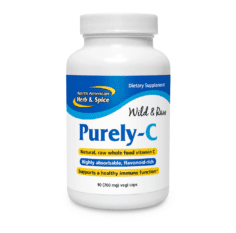
Purely-C Whole Food Vitamin C Complex | Capsules & Bulk Powder
Price range: $37.99 through $63.99 — or subscribe to save 15% Select options This product has multiple variants. The options may be chosen on the product page -
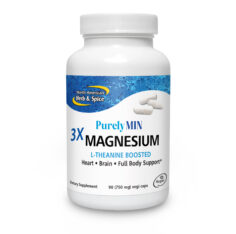
PurelyMin Magnesium Complex
$39.99 — or subscribe to save 15% Add to cart


