
Here is something most people never think about: you could be taking the right vitamins and still not absorbing them. The difference between a nutrient that reaches your cells and one that passes straight through your body comes down to one fundamental question. Is it fat-soluble or water-soluble? Understanding this distinction is not just biochemistry trivia. It changes how you eat, when you supplement, and whether your body is actually getting what it needs.

Two Categories, Two Completely Different Rule Sets
Every essential vitamin falls into one of two categories based on how it dissolves, absorbs, and moves through the body.
Fat-soluble vitamins (A, D, E, and K) dissolve in fat and are absorbed through the intestinal wall alongside dietary lipids. Once absorbed, they are transported through the lymphatic system and stored in the liver and fatty tissues. This means your body can build up long-term reserves over weeks and months, but it also means these vitamins require dietary fat to be absorbed properly. Taking a vitamin D capsule on an empty stomach with no fat is like trying to dissolve oil in water. It simply does not work efficiently.
Water-soluble vitamins (the B complex and vitamin C) dissolve in water and enter the bloodstream directly through the small intestine. According to the National Institutes of Health, water-soluble vitamins are used immediately or excreted through urine within 24 to 48 hours.[1] Your body has virtually no long-term storage for these nutrients. Research published in the American Journal of Clinical Nutrition shows that vitamin C stores are depleted within 30 to 40 days without dietary intake, while most B vitamins have even shorter retention times, being eliminated within hours to days.[2] Are you currently under significant stress? You will deplete these nutrients even faster!
This rapid turnover is why daily replenishment of B vitamins and vitamin C is not optional. It is essential.

The Fat-Soluble Four: Building Your Long-Term Reserves
Vitamin A supports healthy vision, immune function, skin integrity, and cellular communication. It is one of the body’s most important antioxidants and plays a critical role in the formation of white blood cells. An interesting fact: the liver can store up to a year’s supply of vitamin A when intake is adequate, making it one of the most efficiently stored nutrients in the body. *
Vitamin D is a pro-hormone that the body synthesizes in the skin from sunlight. It is essential for calcium absorption, bone health, and immune regulation. Despite its importance, an estimated 42% of American adults are vitamin D deficient, largely because modern lifestyles keep us indoors and away from the sun exposure our bodies evolved to rely on. * Keep in mind you require adequate magnesium intake to activate vitamin D in the body.
Vitamin E is the body’s primary fat-soluble antioxidant, protecting cell membranes from oxidative damage. It plays a particularly important role in skin health, cardiovascular function, reproductive health, and protecting polyunsaturated fatty acids from degradation. Most Americans do not get adequate vitamin E from their diet alone. * Most, if not all, “E” supplements are either GMO, synthetic, or have an incomplete nutrient profile.
Vitamin K is essential for proper blood clotting and plays a recently discovered role in directing calcium into bones and teeth rather than soft tissues and arteries. Vitamin K2 has gained attention for its role in cardiovascular and skeletal health. *

Why Vitamins A and D Should Always Be Taken Together
This is one of the most important and underappreciated principles in nutritional science. Vitamins A and D share receptor sites and regulatory pathways in the body, and research shows they function synergistically. A review published in Viruses found that vitamins A and D together modulate immune function through both innate and adaptive immune cells, and that each vitamin helps regulate the other’s activity.[3] Vitamin A is needed to activate vitamin D receptors, and their combined intake has been shown to support a healthy inflammatory response more effectively than either vitamin taken alone.*
Perhaps most importantly, balanced intake of A and D helps protect against the potential toxicity of taking high doses of either vitamin individually. They act as natural checks on each other. This is exactly how these vitamins occur together in nature, in foods like liver and fish, and it is how they should be supplemented. *

The Water-Soluble Essentials: Your Daily Non-Negotiables
Because B vitamins and vitamin C cannot be stored long-term, they must be replenished every single day. And the timing matters. Taking your water-soluble vitamins in the morning is ideal for several important reasons.
The B complex vitamins (thiamine, riboflavin, niacin, B5, B6, biotin, folate, and B12) are the engines behind your body’s energy production, metabolism, nerve function, and stress response. They serve as coenzymes in the metabolic pathways that convert food into usable cellular energy. Without adequate B vitamins, your mitochondria cannot function efficiently, which is why fatigue is one of the earliest signs of deficiency. Morning supplementation gives your body the metabolic fuel it needs right when energy demands are highest. *
B vitamins also play a critical role in mental health and mood regulation. They are required for the synthesis of neurotransmitters, including serotonin, dopamine, and GABA. Deficiency in B6, B12, and folate has been associated with increased risk of mood disturbances and anemia. *
Vitamin C is far more than an immune support nutrient. It is required for collagen production, iron absorption, wound healing, and the maintenance of cartilage, bones, and teeth. It is also one of the body’s most powerful water-soluble antioxidants. Because vitamin C is excreted so rapidly, consistent daily intake is the only way to maintain adequate levels. Your body cannot make it, and it cannot hold onto it. *

Why We Only Recommend Whole Food Vitamin Sources
Here is a fact that may surprise you: nearly all B-complex capsules and tablets on the market contain B vitamins derived from coal tar or petroleum sources. These synthetic vitamins may share a similar molecular structure with their natural counterparts, but they lack the cofactors, enzymes, and phytonutrients that come with whole food sources and that help the body recognize, absorb, and utilize them properly.
At North American Herb & Spice, every vitamin product in our line is made exclusively from real, whole food ingredients. No synthetics. No petrochemical derivatives. No isolated compounds grown on GMO substrates. We believe that the body was designed to receive its nutrition from food, and that is exactly what we deliver.

Your Whole Food Vitamin Protocol
For your daily Bs: Purely B is the world’s only truly whole food B complex, made from rice bran, rice germ, torula yeast, royal jelly, wild raw chaga, and organic roasted maca. It provides the full range of B vitamins entirely from food. *
Purely Liver capsules offer another powerful whole food B vitamin source, providing the bioavailable B12, folate, and iron that only grass-fed beef liver can deliver. *
For your daily C: Purely C delivers vitamin C from whole-food sources, including camu camu berries, acerola cherries, and rose hips, along with the naturally occurring bioflavonoids that support vitamin C absorption and utilization. *
For A & D together: PolarPower wild sockeye salmon oil provides vitamins A and D exactly as nature intended, together in a whole food matrix alongside omega-3 fatty acids and the antioxidant astaxanthin. *
For E: Purely E delivers whole food vitamin E from sunflower seed oil, pumpkin seed oil, and red palm oil, providing the full spectrum of tocopherols and tocotrienols. *
For everything in one system: Purely Pak is your daily whole-food multivitamin system, combining the full range of fat-soluble and water-soluble nutrients from real food sources, including wild sockeye salmon, beef liver, camu camu, sunflower seed, and more. One pak per day covers your bases with nothing synthetic. *
The Bottom Line
The vitamins you take are only as good as your body’s ability to absorb and use them. Fat-soluble vitamins need dietary fat and build up slowly over time. Water-soluble vitamins need daily replenishment, ideally in the morning when your body needs them most. And all of them work better when they come from real, whole food sources that your body was designed to recognize. Stop guessing. Start absorbing.
References
[1] National Institutes of Health. Water-Soluble Vitamins. NIH Office of Dietary Supplements. [2] Biochemistry, Water Soluble Vitamins. StatPearls [Internet]. National Library of Medicine. 2023. [3] The role of vitamin A and vitamin D in modulation of the immune response with a focus on innate lymphoid cells. Viruses. 2021. PMC8568032.*These statements have not been evaluated by the Food and Drug Administration. These products are not intended to diagnose, treat, cure, or prevent any disease.
Explore our trending products:
-
Herbal-zzZs – Melatonin-Free Sleep Support
$31.99 — or subscribe to save 15% Add to cart -
Black Seed-Plus Capsules
$29.99 — or subscribe to save 15% Select options This product has multiple variants. The options may be chosen on the product page -
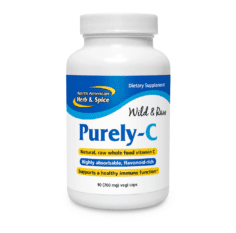
Purely-C Whole Food Vitamin C Complex | Capsules & Bulk Powder
Price range: $37.99 through $63.99 — or subscribe to save 15% Select options This product has multiple variants. The options may be chosen on the product page -
PurelyMin Magnesium Complex
$39.99 — or subscribe to save 15% Add to cart


