

Every year, American farmers spray over one billion pounds of pesticides across the nation’s cropland. Glyphosate alone accounts for roughly 280 million pounds annually, enough to dose every single person in the country with a full pound of active ingredient. That’s not an exaggeration; that’s USDA and USGS data. And it doesn’t even include the 21 million additional pounds sprayed by homeowners, municipalities, and landscapers every year.
The result? The CDC’s National Health and Nutrition Examination Survey found detectable glyphosate in 80% of American adults and 87% of children tested. It shows up in our rain, our rivers, our food, our breast milk, and our urine. We are, quite literally, marinating in it.
This article is a practical guide to what’s really in our food, what it’s doing to our bodies, and how to defend yourself, your family, and your microbiome from the fallout.

The Dirty Truth About America’s Food Supply
In March 2026, the Environmental Working Group released its annual Shopper’s Guide to Pesticides in Produce, analyzing 54,344 USDA samples of 47 fruits and vegetables. The findings were staggering. 75% of non-organic produce contained pesticide residue, even after the USDA scrubbed, peeled, and washed each sample to mimic home preparation. A total of 264 different pesticides were detected overall.
The most frequently found chemical on American produce in 2026 is a PFAS pesticide, one of the “forever chemicals” linked to cancer, thyroid disease, hormone disruption, and immune system damage. PFAS pesticides were detected on 63% of all Dirty Dozen samples, the first time the category has been spotlighted in the guide.
The 2026 Dirty Dozen
Here are the twelve most contaminated fruits and vegetables in America this year. Buy these organic whenever possible.

Green beans and bell and hot peppers ranked just below the cutoff but topped the list for overall toxicity. If you eat them often, choose organic.

Glyphosate, Paraquat, and the Chemicals We Can’t Escape
Glyphosate (the active ingredient in Roundup) is the most widely applied herbicide in human history. It’s classified as a “probable human carcinogen” by the World Health Organization’s International Agency for Research on Cancer. Bayer, which acquired Monsanto in 2018, has paid out over $11 billion in Roundup cancer settlements and still faces tens of thousands of pending lawsuits alleging links to non-Hodgkin’s lymphoma.
Here’s what most Americans don’t realize: glyphosate is routinely sprayed on wheat, oats, barley, and edible beans just before harvest as a drying agent. That means residues end up in breads, cereals, chickpeas, and countless processed foods we eat every week.
Paraquat is another nightmare. A 2013 meta-analysis in Neurology found exposure roughly doubles the risk of Parkinson’s disease. It is banned in more than 70 countries, including the entire European Union, China, Brazil, Thailand, and the United Kingdom, including the two countries where it is manufactured. Yet the U.S. imports tens of millions of tons each year and continues to spray it on American farms. A single teaspoon can kill a grown adult.
Countries that have banned these chemicals outright have seen measurable public health wins. When South Korea banned paraquat in 2011, pesticide-related deaths plummeted 46%. European populations, who eat glyphosate-free grains, show far lower urinary glyphosate concentrations than Americans do.

What These Chemicals Do Inside Your Body
Beyond cancer risk, pesticide exposure has been linked in peer-reviewed research to premature birth, congenital malformations, fertility decline, lower sperm counts, heart disease, neurodevelopmental damage in children, Parkinson’s disease, and thyroid disorders.
One of the most underreported effects is what glyphosate does to your gut. Research published in Life (2022) showed that more than half of the bacterial species in the human gut microbiome are sensitive to glyphosate. That means it preferentially wipes out beneficial bacteria like Lactobacillus and Bifidobacterium while leaving opportunistic, inflammatory species to proliferate. The consequences reach well past digestion, shaping immunity, mood, metabolism, and inflammation throughout the body.

How To Lower Your Load and Support Your Body
You can’t avoid pesticide exposure completely in today’s world. What you can do is lower the load coming in and give your body the raw materials it needs to do what it does naturally. That starts with smarter, organic food choices and a few targeted, high-quality supplements known for supporting gut and whole-body wellness.
Total Body Purge – Deep Cleanse Support
When you’re looking to support your body’s own natural cleansing pathways, the right botanicals can make all the difference. * Total Body Purge is a whole-body pesticide-free herbal formula built on nine wild, edible greens, herbs, and spices, including dandelion, nettles, black seed, oregano, rosemary, sage, cumin, and bay leaf. These are the same plants traditional cultures have relied on for centuries to support internal wellness. * Paired with clean eating and plenty of water, it’s an ideal way to give your system a seasonal tune-up. *
Oreganol P73 – Microbial Balance Support
Wild oregano has been valued for thousands of years across Mediterranean traditions. Its principal naturally occurring compound, carvacrol, has been the subject of extensive scientific interest for its role in supporting healthy microbial balance in the body. * Oreganol P73 is a blend of the top species wild-harvested from remote Mediterranean mountains and hand-picked for maximum potency. It delivers high carvacrol content and other beneficial plant nutrient compounds in every bottle. It’s a foundational daily ally for anyone focused on supporting gut balance and overall immune wellness in a chemically saturated world.*
Health Bac – Probiotic Support
A diverse, well-populated gut flora is foundational to overall wellness. * Health Bac is a potent probiotic/prebiotic formula featuring hardy strains of Lactobacillus and Bifidobacterium, two of the most studied genera in gut health research. Pair it with probiotic-rich whole foods like raw sauerkraut, kimchi, kefir, and unsweetened yogurt to keep your gut flora diverse and resilient. *

Simple Habits That Dramatically Lower Exposure
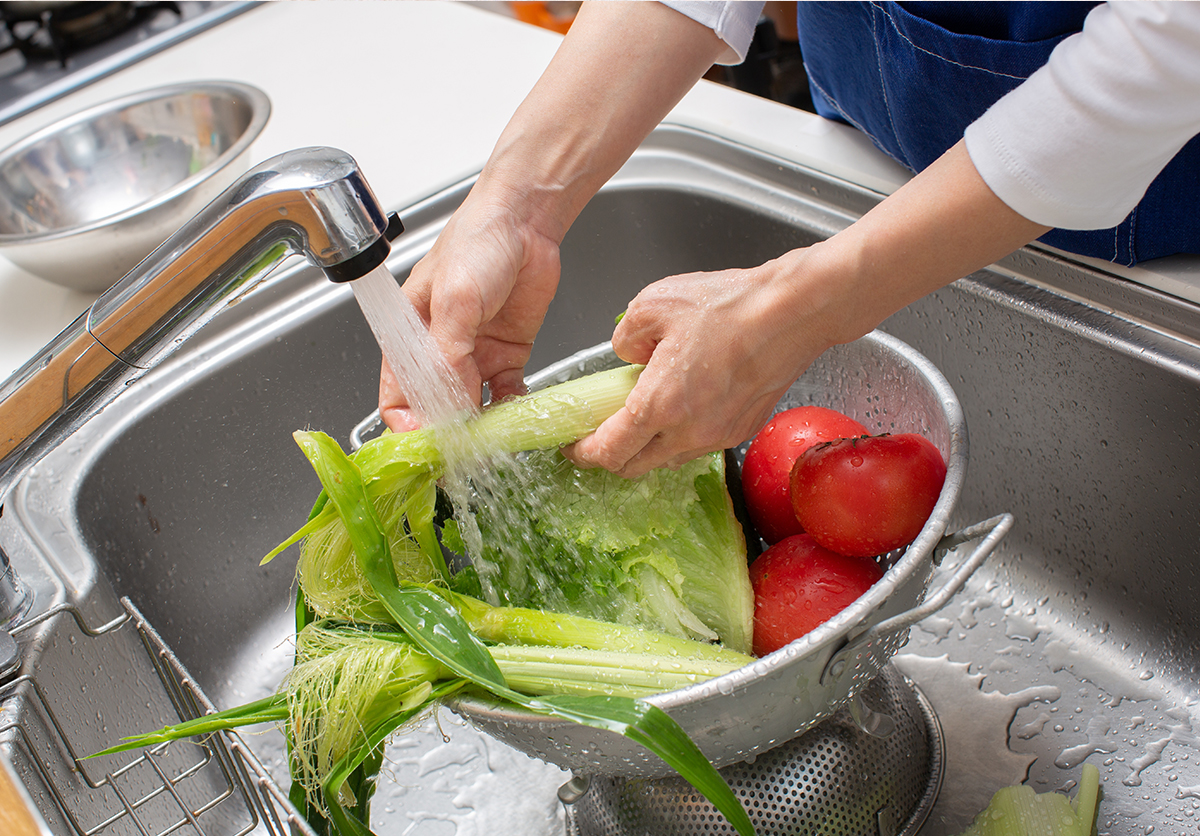
- Wash produce with baking soda. A 2017 University of Massachusetts study published in the Journal of Agricultural and Food Chemistry found that soaking apples in a 1% baking soda solution for 12 to 15 minutes removed up to 96% of surface pesticide residues, far better than tap water or commercial bleach rinses.
- Buy organic for the Dirty Dozen. Studies consistently show that switching to organic produce rapidly lowers urinary pesticide metabolite levels.
- Filter your water. Glyphosate and other agricultural chemicals contaminate watersheds nationwide. Include your shower water, not just what you drink.
- Choose organic grains and legumes, especially oats, wheat, chickpeas, and lentils, which are commonly desiccated with glyphosate.
- Skip home lawn sprays. Residential use of Roundup and similar products is tracked into homes and lingers for weeks.


Grow Your Own Food, as Our Ancestors Did
The single most powerful act of rebellion against the pesticide industrial complex is to grow your own food. Even a few pots of herbs on a sunny windowsill, a backyard tomato patch, or a community garden plot puts real power back in your hands. For generations, families grew, preserved, and shared food without a drop of synthetic chemistry. Heirloom seeds, compost, and patience are still all you really need.
Start small. A single raised bed of greens, tomatoes, and herbs can supply a family with weeks of truly clean produce. Save seeds. Learn from neighbors. Teach your kids. This is the long game, and it’s the one that revives the food system from the ground up.
The Bottom Line
You can’t legislate your way out of a chemical problem that’s already in your bloodstream. What you can do is eat cleaner, wash smarter, rebuild your gut, and take ownership of as much of your food supply as possible. Your body has remarkable self-cleaning machinery. Give it the tools, and it goes to work.
*These statements have not been evaluated by the Food and Drug Administration. These products are not intended to diagnose, treat, cure, or prevent any disease.
References
- Environmental Working Group. (2026). EWG’s 2026 Shopper’s Guide to Pesticides in Produce. https://www.ewg.org/foodnews/
- Ospina, M., et al. (2022). Exposure to glyphosate in the United States: Data from the 2013–2014 National Health and Nutrition Examination Survey. Environment International. https://www.sciencedirect.com/science/article/pii/S0160412022005475
- IARC Monographs Volume 112 (2015). Evaluation of five organophosphate insecticides and herbicides (glyphosate). World Health Organization International Agency for Research on Cancer. https://www.iarc.who.int/featured-news/media-centre-iarc-news-glyphosate/
- Pezzoli, G., & Cereda, E. (2013). Exposure to pesticides or solvents and risk of Parkinson disease. Neurology, 80(22), 2035–2041. https://www.neurology.org/doi/10.1212/WNL.0b013e318294b3c8
- Puigbò, P., Leino, L.I., Rainio, M.J., et al. (2022). Does Glyphosate Affect the Human Microbiota? Life, 12(5), 707. https://www.mdpi.com/2075-1729/12/5/707
- Yang, T., et al. (2017). Effectiveness of Commercial and Homemade Washing Agents in Removing Pesticide Residues on and in Apples. Journal of Agricultural and Food Chemistry, 65(44), 9744–9752. https://pubs.acs.org/doi/abs/10.1021/acs.jafc.7b03118
7. Benbrook, C.M. (2016). Trends in glyphosate herbicide use in the United States and globally. Environmental Sciences Europe, 28, 3. https://enveurope.springeropen.com/articles/10.1186/s12302-016-0070-0
Explore our trending products:
-
Herbal-zzZs – Melatonin-Free Sleep Support
$31.99 — or subscribe to save 15% Add to cart -
Black Seed-Plus Capsules
$29.99 — or subscribe to save 15% Select options This product has multiple variants. The options may be chosen on the product page -
Purely-C Whole Food Vitamin C Complex
Price range: $37.99 through $63.99 — or subscribe to save 15% Select options This product has multiple variants. The options may be chosen on the product page -
PurelyMin Magnesium Complex
$39.99 — or subscribe to save 15% Add to cart


