
Summer means backyard eating, hiking trails, and long evenings outside. It also means mosquitoes, ticks, and the chemical-laden repellents most people reach for without a second thought. But 2026 is shaping up to be one of the more active bug seasons in recent memory, and the smarter move isn’t avoiding the outdoors. It’s understanding what actually keeps biting insects away, and why a handful of essential oils have real research behind them that few people today know much about. This information can help you for years to come.
This Year’s Tick Season Is Already Unusual
This isn’t seasonal alarmism. In April, the CDC issued an early public advisory after its Tick Bite Tracker showed emergency room visits for tick bites running higher than any year since 2017 across nearly every region of the country. Connecticut’s Agricultural Experiment Station reported residents submitting an average of 30 ticks a day for testing, with 40% of those ticks testing positive for the bacteria that cause Lyme disease.

500,000+ projected Lyme Cases. Higest ER visit rate for tick bites since 2017.
The reasons line up: a mild winter that let more ticks survive into Spring, expanding mouse and deer populations that ticks rely on as hosts, and a longer warm season on both ends. The CDC is projecting Lyme disease cases could surpass 500,000 in 2026, a record high, and tick season is arriving earlier and lasting longer in regions that used to get a real winter break. Add the usual mosquito season on top of that, and prevention matters more this year than most.
The Common Denominator: How Insects Actually Find You
Mosquitoes, ticks, and most biting insects don’t see you coming. They smell you. Specialized odorant receptors on their antennae detect carbon dioxide from your breath and lactic acid in your sweat. That’s how they zero in on a host from yards away.
This is exactly where essential oils come in. The aromatic compounds in certain plant oils overwhelm or disrupt those same receptors, making it difficult for insects to detect the chemical signals they depend on. It’s not that bugs find the smell unpleasant in some abstract sense. Their entire targeting system gets jammed.
That’s the real common thread behind cedarwood, lemongrass, peppermint, and oregano oil: each one interferes with insect olfaction in a way synthetic repellents like DEET also exploit, just through different compounds.

What the Research Actually Shows
Cedarwood oil has the strongest tick-specific data of the group. A 2022 study in Experimental and Applied Acarology tested CO2-extracted cedarwood oil against four hard tick species and found it caused concentration-dependent repellency and mortality in blacklegged tick nymphs, the species responsible for most Lyme disease cases, with effects comparable to DEET at the 60-minute mark. The tradeoff is duration: cedarwood’s repellency drops off noticeably after that window, which is why reapplication matters more than with synthetic options. Read the study
Lemongrass oil, the source of citronella, is one of the best-studied natural mosquito deterrents. A 2023 Scientific Reports study from New Mexico State University tested 20 essential oils from the EPA’s Minimum Risk Pesticides list against both Aedes aegypti mosquitoes and blacklegged ticks, and lemongrass performed among the strongest natural options against both. Separate tick-specific research has found that lemongrass oil inhibits a tick’s ability to detect the attractant compounds it normally uses to locate a host, essentially disrupting its search behavior rather than just masking scent. Read the study
Peppermint oil carries some of the most striking percentage numbers in the natural repellent literature. A study published in Bioresource Technology found that peppermint oil applied to skin gave 100%, 92.3%, and 84.5% protection against three different mosquito species over a multi-hour observation window. Its key compound, menthol, appears to directly interfere with the olfactory receptor neurons mosquitoes use to track hosts. Like most essential oils, the effect is strongest in the first hour or two, so it performs best as part of a routine you reapply rather than a one-and-done application. Read the study
Oregano oil rounds out the group, and its repellency comes down to carvacrol, the same compound responsible for its microbial-balancing reputation. A study published in Frontiers in Ecology and Evolution found carvacrol-rich oregano oil achieved 100% repellency against Asian tiger mosquitoes at a dose roughly ten times lower than the comparable DEET dose, and separate research has documented strong repellent activity against bed bugs, fire ants, and ticks as well. Few essential oils show up across this many pest categories with this much consistency. Read the study
We will note to you that application frequency and concentration matter, and a well-formulated blend outperforms a single oil dabbed on once and forgotten.

Building a Smarter Repellent Routine
Given all of this, the most effective natural approach pairs cedarwood (broad-spectrum, tick-focused) with a second oil chosen for personal scent preference and mosquito-specific strength, peppermint or lemongrass:
- Cedarwood + Peppermint for a bright, cooling option that leans on menthol’s strong mosquito data alongside cedarwood’s tick-specific research
- Cedarwood + Lemongrass for a citrus-forward option that pairs cedarwood with one of the better-studied natural mosquito and tick deterrents available
This is exactly the combination behind our own Tick & Mosquito Repellent sprays, one formulated with cedarwood and peppermint oil, the other with cedarwood and lemongrass oil, both built around the EPA-recognized cedarwood concentration shown to perform against blacklegged ticks. Spray on exposed skin and clothing before heading out, and reapply after sweating, swimming, or roughly every couple of hours outdoors, the same reapplication discipline the research above points to.
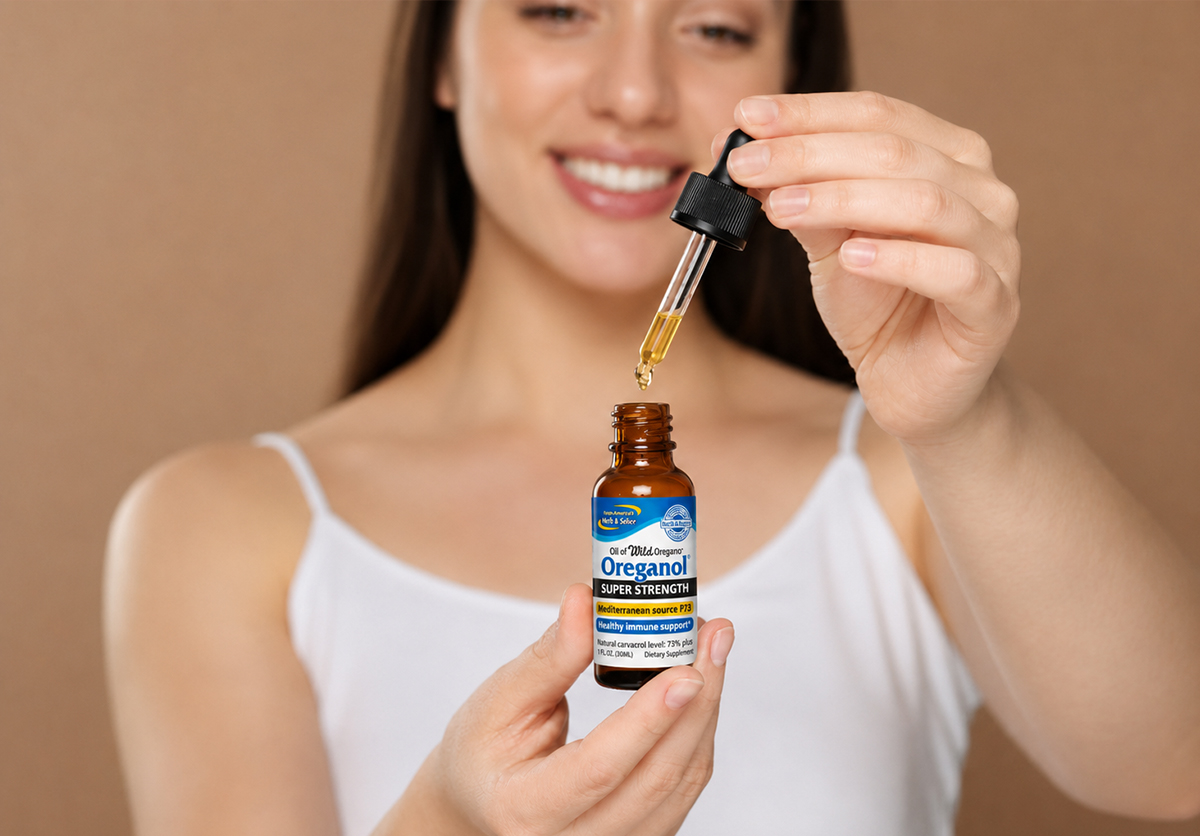

Already Bitten? Reach for Oreganol P73
If a mosquito, tick, or other insect gets to you before the repellent does, what you do in the first few minutes matters. Applying Oreganol P73 directly to a bite or sting is one of the simplest things you can do, and it comes back to that same compound: carvacrol. Beyond its repellent properties, carvacrol has well-documented recovery properties and inflammatory support, which is exactly what an irritated, inflamed bite site needs.
Many longtime users report that applying Oreganol P73 oil immediately to a fresh bee sting or insect bite noticeably reduces pain, swelling, and itching within minutes.
And the wild oil’s unique profile helps support the skin as it heals rather than just numbing the area temporarily.
For a gentler option you can use throughout the day, Oreganol P73 Cream offers the same wild oregano oil in a moisturizing, alcohol-free base alongside wild lavender, making it suitable for soothing bug bites without intensity on sensitive skin.


Don’t Let Bug Season Keep You Inside
None of this is a reason to fear the outdoors. Quite the opposite. Time outside is genuinely good for you, and avoiding it out of fear of bites trades a real benefit for a manageable risk. The better approach is the one outdoor enthusiasts have always relied on: know what works, apply it consistently, and carry something for the moments that prevention doesn’t quite catch.
With an unusually active tick season already underway and mosquito activity ramping up across much of the country, this is the year to take both seriously. Don’t travel without protection. Always pack a natural repellent and keep Oreganol P73 in your bag. Now it’s time to go out there with confidence and enjoy the season!
Relevant NAHS Products of Support
Tick & Mosquito Repellent: Peppermint a cedarwood and peppermint oil-based spray, safe for the whole family and pets when used as directed, built around the cedarwood concentration shown effective against blacklegged ticks. Shop Peppermint Repellent →
Bug-X: Lemongrass a cedarwood and lemongrass oil-based spray for a citrus-forward alternative, ideal for hiking, golf, gardening, or backyard time with the family. Shop Lemongrass Repellent →
Oreganol P73 the original wild, high-mountain oregano oil, 73% carvacrol, for immediate application to fresh bites and stings. Shop Oreganol P73 Oil →
Oreganol P73 Cream an alcohol-free moisturizing cream with wild oregano and lavender oil, suited to soothing bug bites, stings, and irritated skin throughout the day. Shop Oreganol P73 Cream →
These statements have not been evaluated by the Food and Drug Administration. These products are not intended to diagnose, treat, cure, or prevent any disease.
References
CDC Newsroom. (2026). CDC Data Show Weekly ER Visits for Tick Bites Higher than Usual. CDC.gov. Read the study
Flor-Weiler, L. B., et al. (2022). Repellency and Toxicity of a CO2-Derived Cedarwood Oil on Hard Tick Species (Ixodidae). Experimental and Applied Acarology. Read the study
Luker, H. A., et al. (2023). Repellent Efficacy of 20 Essential Oils on Aedes aegypti Mosquitoes and Ixodes scapularis Ticks in Contact-Repellency Assays. Scientific Reports. Read the study
Amer, A., & Mehlhorn, H. (2000). Larvicidal and Mosquito Repellent Action of Peppermint (Mentha piperita) Oil. Bioresource Technology. Read the study
Evergetis, E., et al. (2018). From Bio-Prospecting to Field Assessment: The Case of Carvacrol Rich Essential Oil as a Potent Mosquito Larvicidal and Repellent Agent. Frontiers in Ecology and Evolution. Read the study
Explore our trending products:
-
Herbal-zzZs – Melatonin-Free Sleep Support
$31.99 — or subscribe to save 15% Add to cart -
Black Seed-Plus Capsules
$29.99 — or subscribe to save 15% Select options This product has multiple variants. The options may be chosen on the product page -
Purely-C Whole Food Vitamin C Complex | Capsules & Bulk Powder
Price range: $37.99 through $63.99 — or subscribe to save 15% Select options This product has multiple variants. The options may be chosen on the product page -

PurelyMin Magnesium Complex
$39.99 — or subscribe to save 15% Add to cart


