

You’ve tried the serums. You’ve swapped your pillowcase to silk, cut back on sugar for a week, and bought yet another “miracle” moisturizer that promised to calm the redness, dullness, or breakouts that seem to show up out of nowhere. And yet, here you are, still squinting in the bathroom mirror wondering why your skin feels like it’s working against you.
Here’s something most skincare routines never mention: the trouble might not be starting on your face at all. It might be starting two feet lower, in your gut.
It sounds almost too simple to be true. How could something happening in your digestive tract have anything to do with the breakout on your chin or the dullness you can’t seem to shake? But if you think back, you’ve probably noticed it yourself. The week your stomach was off, your skin was off too. The stretch where you finally started sleeping and eating well, your complexion seemed to follow along a few days later. That’s not a coincidence; it’s a relationship that researchers have been mapping for years.

Your Gut and Your Skin Are in Constant Conversation
Researchers have a name for this relationship: the gut-skin axis. It describes the two-way communication line between the trillions of microorganisms living in your digestive tract and the largest organ you have, your skin. According to a review published in the journal Cells, this axis helps regulate immune activity, inflammation, and metabolic processes that ultimately influence how your skin looks and feels (Salem et al., 2018).
Think of your gut as the control room and your skin as the billboard out front. When the control room is humming along, sending out balanced signals and steady nutrients, the billboard tends to look the part, calm, clear, resilient. When the control room is in chaos, dealing with an overgrowth of unwelcome microbes, sluggish digestion, or a constant low hum of inflammation, that chaos has a way of broadcasting itself outward. Suddenly your skin is reacting to something you can’t even see.
This is why so many people in their 30s, 40s, and 50s find that the typical “more product” approach to skin concerns hits a wall. You can’t moisturize your way out of a gut that’s struggling to keep up.

It’s Not Just One Thing, It’s a System
If there’s one thing that becomes clear once you start looking at the gut-skin connection, it’s that no single nutrient or herb is a magic fix. Your gut is a system: it needs the right microbial environment, the right tools to manage everyday inflammation, the right minerals to keep its metabolic machinery running, the right fuel to convert food into usable energy, and the right building blocks to keep its lining intact. Pull on any one of those threads long enough, and you can feel and see the difference.
Let’s walk through what the research says about each piece of that system.

Keeping Microbial Balance in Check
Your gut is home to an enormous, ever-shifting community of bacteria, and keeping that community in balance is a full-time job. Mediterranean oregano oil, especially wild-sourced and mountain-grown, has long been studied for its role in supporting a balanced microbial environment, largely thanks to two naturally occurring compounds, carvacrol and thymol. Laboratory research published in Frontiers in Microbiology found that thymol and carvacrol helped protect the integrity of intestinal cell layers and reduced the ability of unwanted bacteria to take hold (Wagle et al., 2021). When that internal environment is steadier, it’s one less thing your body must fight against in the background.

Helping the Body Manage Everyday Inflammation
“Inflammation” has become such a buzzword that it’s easy to tune out, but the everyday, low-grade kind is exactly what tends to show up on your skin as redness, puffiness, or that “tired” look no amount of concealer quite fixes. Full-spectrum black seed oil, derived from Nigella sativa, has been the subject of a substantial body of research into its role in supporting the body’s normal inflammatory response and everyday digestive comfort. A review in World Journal of Gastroenterology highlighted how thymoquinone, the primary active compound in black seed oil, supports digestive comfort and helps the body maintain a normal, balanced inflammatory response in the gastrointestinal tract (Kapoor, 2009). For anyone who has ever felt like their stomach and their skin seem to have bad days at the exact same time, this is the kind of overlap that starts to make sense.
The Mineral Working Behind the Scenes
Magnesium rarely gets the spotlight, but it’s involved in hundreds of processes that keep your body running, including the metabolism of protein, the building block your gut lining and, frankly, your skin depend on. A review published in Pharmaceuticals described magnesium’s role as a cofactor in enzymatic reactions tied to protein synthesis and cellular energy production, while also noting its part in the body’s natural processes for managing and clearing everyday environmental exposures, including certain heavy metals (Gröber et al., 2015). In other words, magnesium isn’t just “for sleep” or “for muscles”, it’s quietly supporting the metabolic groundwork your whole system, gut included, runs on.

Fueling the Process from the Inside
Ever notice how a few rough nights of sleep or a stretch of takeout meals can leave your skin looking flat and your energy in the basement? B vitamins are central to how your body converts food into usable energy, acting as the coenzymes and cofactors your cells need to keep their metabolic engines running. A review in the International Journal of Molecular Sciences outlined how each of the B vitamins plays a distinct role in cellular energy metabolism, and how a shortfall in any one of them can have a ripple effect on overall function (Kennedy, 2016). When your body has the metabolic fuel it needs, it has more capacity left over for the maintenance work, like supporting your gut lining and your skin. We recommend real, whole food sources instead of synthetic ones for your Bs. There is a BIG difference in absorption and how well your body tolerates it.
Protecting the Barrier That Holds Everything Together
Your gut lining is essentially a gatekeeper, deciding what gets absorbed into your body and what doesn’t. Keeping that barrier strong is foundational, and this is where collagen and vitamin C work as a team. Collagen supplies amino acids that support the structural proteins of the gut lining, while vitamin C plays a well-established role in collagen formation. Laboratory research published in Food & Function found that collagen peptides helped reinforce the tight junctions between intestinal cells, the microscopic “seals” that keep the gut barrier intact, even under simulated inflammatory stress (Chen et al., 2017). A steady gut barrier means your body isn’t constantly playing defense, which can free up resources for things like, say, glowing skin.

Bringing It Back to the Mirror
None of this means you need to overhaul your entire life overnight. But it does mean that the next time you’re frustrated with a complexion that won’t cooperate, it might be worth widening the lens. Skin issues rarely live in isolation; they’re often a reflection of how everything underneath is functioning, especially the gut.
The good news is that supporting your gut doesn’t have to be complicated or restrictive. It can be as simple as choosing ingredients with research-backed roles in microbial balance, everyday inflammation support, mineral status, metabolic energy, and gut lining integrity, and letting your body do what it does best when it has what it needs.
Think of it less like adding another step to your routine and more like finally addressing the root of the routine itself. You’ve spent years working from the outside in. This is what it looks like to work from the inside out instead, giving your gut the everyday support it needs so your skin has less to compensate for.
And here’s the part that tends to surprise people most: this isn’t about chasing a trend or overhauling everything you eat overnight. It’s about consistency with the basics, the kind of small, steady choices that, over weeks and months, add up to a complexion (and a gut) that finally feels like it’s on your side.
Your skin has been trying to tell you something. Maybe it’s time to listen from the inside out.
Ingredients Mentioned in This Article
OregaBiotic , formulated with wild Mediterranean oregano oil, this gut-support favorite is a simple way to bring research-backed microbial balance into your daily routine, for a calmer gut and a clearer-looking complexion. Shop OregaBiotic
PurelyMin Magnesium Complex, A highly bioavailable magnesium blend that supports the metabolic groundwork your gut, skin, and energy levels all quietly depend on. Shop PurelyMin
Total Body Purge, A wild, raw blend featuring black seed oil and whole-plant botanicals designed to support your body’s everyday detoxification process from the inside out, for a gut (and glow) that feels lighter. Shop Total Body Purge
CollaGem Unflavored Powder, A complete collagen delivery system pairing bio-available collagen peptides with whole-food vitamin C, made to support your gut lining, skin, hair, and nails in one simple daily scoop. Shop CollaGem
These statements have not been evaluated by the Food and Drug Administration. These products are not intended to diagnose, treat, cure, or prevent any disease.
References
- Salem, I., Ramser, A., Isham, N., & Ghannoum, M. A. (2018). The Gut Microbiome as a Major Regulator of the Gut-Skin Axis. Cells. Read the study
- Wagle, B. R., et al. (2021). Thymol and Carvacrol Help Protect Intestinal Barrier Integrity and Limit Pathogen Activity. Frontiers in Microbiology. Read the study
- Kapoor, S. (2009). Gastrointestinal Effects of Nigella sativa and Its Main Constituent, Thymoquinone: A Review. World Journal of Gastroenterology. Read the study
- Gröber, U., Schmidt, J., & Kisters, K. (2015). Magnesium in Prevention and Therapy. Pharmaceuticals. Read the study
- Kennedy, D. O. (2016). B Vitamins and the Brain: Mechanisms, Dose and Efficacy , A Review. International Journal of Molecular Sciences. Read the study
- Chen, Q., et al. (2017). Collagen Peptides Ameliorate Intestinal Epithelial Barrier Dysfunction in Immunostimulatory Caco-2 Cell Monolayers via Enhancing Tight Junctions. Food & Function. Read the study
Explore our trending products:
-
Herbal-zzZs – Melatonin-Free Sleep Support
$31.99 — or subscribe to save 15% Add to cart -
Black Seed-Plus Capsules
$29.99 — or subscribe to save 15% Select options This product has multiple variants. The options may be chosen on the product page -
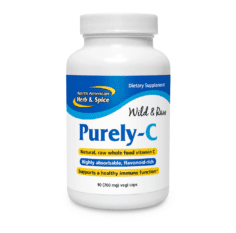
Purely-C Whole Food Vitamin C Complex | Capsules & Bulk Powder
Price range: $37.99 through $63.99 — or subscribe to save 15% Select options This product has multiple variants. The options may be chosen on the product page -
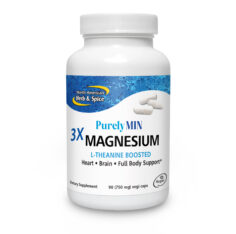
PurelyMin Magnesium Complex
$39.99 — or subscribe to save 15% Add to cart


