
There is an important reason why wild blueberries taste different from the plump, uniform ones in the grocery store. They are smaller, more intensely colored, and packed with a density of flavor that their cultivated cousins simply cannot match. That is not a coincidence. It is biology. And it applies to far more than blueberries. From oregano and turmeric to dandelion and camu camu berries, wild plants consistently outperform their commercially farmed counterparts in the measures that matter most for human health.
Understanding why is the key to learning how wildcrafted herbs are not just different from conventional supplements. They are fundamentally superior.

Stress Makes Strength: Why Wild Plants Are More Potent
Plants that grow in the wild face challenges that cultivated crops never encounter. They compete for sunlight, water, and soil nutrients. They endure temperature extremes, drought, wind, UV radiation, and constant pressure from insects, fungi, and grazing animals. Unlike commercial crops, there are no pesticide applications, irrigation systems, or greenhouses to “protect” them.
In response to these stressors, wild plants produce higher concentrations of secondary metabolites, the very compounds we value most: polyphenols, flavonoids, terpenes, and other antioxidants. These are the plant’s own defense chemistry, and the harder the environment, the more of it the plant produces. A study published in BioMed Research International compared wild and cultivated specimens of the same medicinal plant species and found that wild extracts contained significantly higher phytochemical contents, including phenols, flavonoids, tannins, and alkaloids, and demonstrated stronger antioxidant activity across multiple assays.[1]
A separate study comparing wild and cultivated oregano, published in Plants (MDPI), found that wild oregano contained 56.9% total phenol content, significantly higher than cultivated specimens. The wild oregano also produced a carvacrol content of 50.9% compared to 32.6% in cultivated plants, nearly 60% more of the compound most valued for its biological activity. The wild oil also demonstrated excellent microbial balancing activity when put to the test in the study. [2] It should be noted these findings deal with wild “Mexican” oregano, and the Mediterranean oregano we harvest is routinely over 70% carvacrol, even more impressive!
This is not a small difference. It is the difference between a plant that has been coddled and one that has been forged.

The Soil Problem: What Commercial Farming Has Taken Away
Even if cultivated herbs started with the same genetic potential as their wild counterparts, the soil they grow in tells a different story. A landmark study published in the Journal of the American College of Nutrition compared USDA nutrient data for 43 garden crops between 1950 and 1999 and found statistically reliable declines in protein, calcium, phosphorus, iron, riboflavin (B2), and vitamin C.[3] More recent analyses across multiple countries have documented mineral losses of 16 to 76 percent in common fruits and vegetables over the past 50 to 70 years.
The cause is straightforward: decades of intensive commercial farming strip the soil of minerals and microbial diversity faster than it can be replenished. Synthetic NPK (nitrogen, phosphorus, potassium) fertilizers replace just three macronutrients while ignoring the dozens of trace minerals and the complex microbial ecosystems that healthy soil depends on. The result is produce that looks the same on the outside but is measurably diminished on the inside.
Wild plants, by contrast, grow in undisturbed ecosystems where soil has been building naturally for centuries. Mountain meadows, remote forests, and untouched volcanic hillsides do not suffer from the mineral depletion and microbial collapse of commercial farmland. The minerals are there. The microbiology is intact. And the plants that grow in those soils express that richness in every leaf, root, and berry.

Better Flavor, Better Chemistry
Anyone who has compared a wild strawberry to a supermarket strawberry knows the flavor difference is dramatic. That intensity of flavor is not just a culinary perk. It is a direct indicator of phytochemical density. The compounds that create aroma and taste in herbs, terpenes, phenols, and volatile oils, are the same compounds responsible for their biological activity.
Wild oregano from Mediterranean mountain slopes has a depth and pungency that farm-raised oregano simply cannot replicate. Wild turmeric from remote protected highland regions carries a more complex curcuminoid profile. Wild rosemary and sage, forged in rocky, arid soils, develop aromatic profiles far richer than their irrigated, fertilized commercial counterparts. When an herb tastes more potent, it usually means more for your health benefits.

Finding Wild Sources in a Shrinking World
Here is the challenge: truly wild, remote harvesting areas are becoming increasingly difficult to find. Urbanization, deforestation, industrial agriculture, and climate change are encroaching on the pristine ecosystems that produce the most powerful wild herbs. Finding and maintaining access to these sources requires more than just a purchasing department. It requires a commitment.
At North American Herb & Spice, we still take on that task. We source our wildcrafted ingredients from remote mountain regions, pristine forests, and untouched wilderness areas around the world. But sourcing is only part of the equation. We invest directly in the small communities that harvest these plants, providing fair trade compensation and infrastructure support to sustain both the people and the ecosystems that make wildcrafting possible. This is not charity. It is a long-term partnership designed to protect these endangered harvesting areas for generations to come.
Without this kind of investment, the world’s remaining wild herb, fruit, and vegetable sources will continue to shrink, and the supplements that depend on them will either disappear or quietly switch to cheaper cultivated alternatives without telling you.

Our Wild Ingredients: What You Cannot Find at the Grocery Store
The wildcrafted herbs and whole foods in our product line represent a caliber of raw material that is simply unavailable on conventional store shelves. These are not mass-produced extracts. They are hand-harvested, minimally processed, and selected specifically for their robust antioxidant and phytochemical profiles.
Wild oregano is the foundation of our Oreganol P73 line, sourced from high-altitude Mediterranean mountains where harsh conditions produce some of the most phenol-rich oregano oil on earth. Wild turmeric from remote highland regions provides a naturally complex curcuminoid profile without synthetic standardization. Wild honey from pristine, unpolluted environments delivers raw enzymes and antioxidants that pasteurized and pesticide-laden commercial honey has lost. *
Wild sage and rosemary are harvested from rocky, mineral-rich Mediterranean terrain where their essential oil profiles develop extraordinary depth. Wild dandelion, burdock, and nettles are the backbone of traditional detoxification support, and our wild-harvested sources deliver mineral and phytochemical densities that cultivated greens cannot approach. *

And then there are wild camu camu berries from the Amazon basin, one of the most vitamin C-dense fruits on the planet. A single serving of camu camu delivers dramatically more natural vitamin C than oranges, along with a spectrum of flavonoids and anthocyanins that isolated ascorbic acid supplements simply do not contain. *
Every one of these ingredients represents something you cannot replicate in a factory or on a commercial farm. They are the product of wild ecosystems, ancient soils, and centuries of undisturbed growth.
The Bottom Line
Wildcrafted herbs are not a marketing trend. They are the original standard of quality that humans relied on for thousands of years before industrial agriculture changed the equation. The science confirms what traditional herbalists always knew: wild plants, shaped by environmental stress and nourished by living soils, produce more of the compounds that matter for human health. Finding and preserving these sources takes real effort and real investment. But the difference between a wild herb and a cultivated one is the difference between a supplement that works and one that merely exists.
References
[1] Mangoale RM, Afolayan AJ. Comparative Phytochemical Constituents and Antioxidant Activity of Wild and Cultivated Alepidea amatymbica. BioMed Research International. 2020. https://www.ncbi.nlm.nih.gov/pmc/articles/PMC7174954/ [2] Ortega-Ramirez LA, et al. Comparison of Chemical Composition and Antibacterial Activity of the Essential Oil of Cultivated and Wild Mexican Oregano. Plants. 2022;11(14):1785. https://www.ncbi.nlm.nih.gov/pmc/articles/PMC9323172/ [3] Davis DR, Epp MD, Riordan HD. Changes in USDA Food Composition Data for 43 Garden Crops, 1950 to 1999. Journal of the American College of Nutrition. 2004;23(6):669-682. https://pubmed.ncbi.nlm.nih.gov/15637215/*These statements have not been evaluated by the Food and Drug Administration. These products are not intended to diagnose, treat, cure, or prevent any disease.
Explore our trending products:
-
Herbal-zzZs – Melatonin-Free Sleep Support
$31.99 — or subscribe to save 15% Add to cart -
Black Seed-Plus Capsules
$29.99 — or subscribe to save 15% Select options This product has multiple variants. The options may be chosen on the product page -
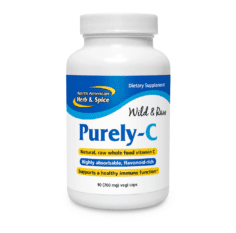
Purely-C Whole Food Vitamin C Complex | Capsules & Bulk Powder
Price range: $37.99 through $63.99 — or subscribe to save 15% Select options This product has multiple variants. The options may be chosen on the product page -

PurelyMin Magnesium Complex
$39.99 — or subscribe to save 15% Add to cart


