
This overlooked B-vitamin relative quietly shapes your liver, brain, and stress resilience, and the fix is more nuanced than one supplement
Ask most people to name the nutrients they’re worried about running low on, and choline won’t make the list. It doesn’t have the name recognition of vitamin D or the marketing muscle of omega-3s. But according to national nutrition survey data, choline is one of the few nutrients where the average American adult isn’t just falling short: they’re missing it almost entirely. Only 6.6% of U.S. adults age 19 and older meet the Adequate Intake for choline, and the shortfall is even larger among teenagers.
That is not a rounding error. It is nearly the entire adult population running on empty for a nutrient your liver, brain, muscles, and nervous system depend on every single day.

What Choline Does
Choline is often filed under “vitamin-like nutrient,” which undersells it. It is the direct precursor for phosphatidylcholine, the primary structural fat in every cell membrane in your body and the molecule your liver uses to package and export fat as VLDL. (Very Low-Density Lipoprotein) is a small transport particle your liver makes to package up fat and send it out into your bloodstream. Think of it like a delivery truck: your liver produces fat, loads it onto VLDL, and ships it out to the rest of the body for storage or energy. Without enough choline, fat has nowhere to go and begins accumulating in liver tissue instead. This can show up as a “fatty liver” later on.
Choline is also the raw material for acetylcholine, the neurotransmitter responsible for muscle contraction, memory formation, and attention. And it feeds into betaine production, a methyl donor that supports the same methylation pathways folate (B9) is famous for. Methylation is one of the most common maintenance processes happening in your cells, all day, every day. In simple terms, it’s your body attaching a small chemical tag (called a methyl group) onto other molecules to switch things on or off, activate them, or mark them for a specific job. It’s involved in turning genes on and off, helping your liver process and clear waste products, producing key brain chemicals, and repairing DNA. It’s less a single event and more a constant background process, like how a factory is always tagging and routing packages to keep everything moving correctly.
In short: cell membranes, liver fat export, brain signaling, and methylation all lean on this one nutrient simultaneously. It is also considered critical during pregnancy, supporting fetal brain and neural tube development.

What Happens When You Don’t Get Enough
This isn’t theoretical. In a controlled feeding trial published in the American Journal of Clinical Nutrition, 57 healthy adults were fed a very low-choline diet for up to 42 days. The results were striking: 77% of men and 80% of postmenopausal women developed fatty liver or measurable muscle damage. Only 44% of premenopausal women did, likely because estrogen helps the body manufacture some of its own phosphatidylcholine. Even more notable: six of the men in the study still developed organ dysfunction while consuming the current Adequate Intake of 550 mg per day, suggesting that the standard recommendation is a population average, not a guarantee for every individual.
Genetics plays a role here too. Research has identified common variants in genes that manage the interplay between choline, folate, and methylation. People carrying these variants may need meaningfully more choline than the standard recommendation to avoid the same liver and muscle consequences seen in the depletion trial.
Why the Math Gets Hard Without Eggs and Liver
Choline is not evenly distributed across the food supply. Only a small handful of foods carry most of the practical weight, and the numbers make it obvious why so many people fall short.

Beef liver is the single densest source, but most people simply don’t eat organ meat regularly. Among foods people commonly reach for, one large egg delivers 147 mg, roughly twice the next-best common option. Lean beef, salmon, and chicken breast trail behind at 60 to 115 mg per serving, and milk, broccoli, and most plant foods sit in the 30 to 50 mg range.
Remove eggs from the equation, and hitting 425 to 550 mg a day requires deliberately building meals around organ meats, fish, and legumes; something very few people do consistently. This is exactly why the “eggs are bad for cholesterol” advice of past decades quietly removed the most convenient source of a nutrient most people were already running short on.

The Choline and Folate Partnership Nobody Talks About
Folate gets most of the credit for supporting healthy methylation, but choline is doing a substantial share of that work behind the scenes. Roughly 30 to 50% of the methyl groups your liver uses come from choline, not folate. That means a diet low in choline can impair methylation even when folate intake looks perfectly adequate on paper.
Both nutrients feed into the same methionine-to-SAM cycle-the specific engine inside your cells that actually produces those methyl tags used in methylation. Here’s the simplified version: your body takes an amino acid called methionine (from protein you eat) and converts it into a molecule called SAM (short for S-adenosylmethionine). SAM is the direct “methyl tag” donor. Once it delivers its tag, it becomes a byproduct called homocysteine, an amino acid your body uses to make proteins, which then needs to be recycled back into methionine so the cycle can run again. Choline and folate are both essential fuel sources that keep this recycling loop turning. If either one runs low, SAM production slows, homocysteine can build up, and the entire methylation system downstream starts to strain. Choline and Folate help clear homocysteine, and both support liver function and healthy DNA regulation. When folate demand rises, the body leans harder on choline to keep up, which is one reason folate supplementation alone doesn’t always resolve a methylation problem. The two nutrients were designed to work as a system, not as substitutes for one another.
Note: Pregnant and lactating women, people eating low-egg or low-animal-food diets, and anyone with the genetic variants mentioned earlier should pay particularly close attention to getting enough of both nutrients. Fortunately, we offer a powerful wholefood beef liver supplement that includes both!

The Stress and Mood Connection
Here is where choline gets even more interesting. A 2025 meta-analysis published in Molecular Psychiatry, which pooled data from 25 brain-imaging studies covering over 700 participants, found that people with anxiety disorders had roughly 8% lower levels of choline-containing compounds in the cortex, the brain region responsible for planning, emotional regulation, and decision-making. The reduction showed up consistently across generalized anxiety, social anxiety, and panic disorder alike.
The proposed explanation is metabolic: chronic stress elevates noradrenaline, which accelerates the breakdown and rebuilding of neuronal cell membranes. That accelerated turnover pulls choline into structural repair faster than it can be replenished, leaving less available for everything else the brain needs it for, including the new learning and synaptic adaptation that recovery from anxiety actually depends on. In other words, a stressed brain may simply be burning through its choline supply faster than diet is replacing it.
Recovery from anxiety requires new learning inside cortical circuits, and that learning runs on choline-dependent processes: membrane remodeling, methylation, and synaptic restructuring. A brain running short on choline may not have the raw material it needs to adapt.

Where Omega-3s Fit In
Choline doesn’t travel to the brain on its own. It largely crosses into brain tissue bound to an omega-3 fatty acid, in a carrier molecule called lysophosphatidylcholine. That means adequate omega-3 status, specifically combined EPA and DHA, directly affects how much choline reaches the cortical tissue that needs it. A meta-analysis in JAMA Network Open found that omega-3 supplementation, generally in the range of 1 to 2 grams per day of combined EPA and DHA, was associated with meaningful reductions in anxiety symptoms across multiple trials.
This creates a genuine two-nutrient relationship: omega-3s help transport choline into the brain, and both appear to independently support the stress-adaptation systems that anxiety disorders place under strain. Supporting one without the other may leave part of the mechanism unaddressed.
Bringing It Together
None of this is about chasing a single miracle nutrient. It’s about recognizing that choline sits at the intersection of liver health, brain chemistry, and stress resilience, and that most people are simply not getting enough of it from food alone. The practical takeaway is straightforward: prioritize choline-dense foods where you can, pay attention to the folate relationship rather than treating the two nutrients as interchangeable, and consider your omega-3 intake as part of the same picture rather than a separate concern.

Where NAHS Products Fit into This Picture
If building daily choline, folate, and omega-3 intake from food alone feels like a moving target, these three products are designed to work with exactly the mechanisms described above.
Purely Liver Capsules
Liver is nature’s most concentrated whole-food source of choline, and it arrives already packaged with its natural cofactor, folate, along with a full spectrum of B vitamins. Rather than isolating choline on its own, Purely Liver supports the nutrient the way it’s found in nature: alongside the exact partners its metabolism depends on.
Polar Power Soft Gels
A concentrated source of omega-3 EPA and DHA, formulated to support the transport pathway that carries choline into brain tissue. Since omega-3 status directly affects how much choline reaches the cortex, Polar Power is a natural companion to any choline-focused routine, especially for anyone managing everyday stress.
Ashwagandha Capsules
Ashwagandha contains modest natural choline and has a long history of traditional use for supporting the body’s response to everyday stress. Paired with adequate choline and omega-3 intake, it rounds out a foundation aimed at supporting the same stress-adaptation systems discussed above.
Sources: Wallace TC, Fulgoni VL 3rd. Assessment of Total Choline Intakes in the United States. J Am Coll Nutr. 2016;35(2):108-112. • Fischer LM, daCosta KA, Kwock L, et al. Sex and menopausal status influence human dietary requirements for the nutrient choline. Am J Clin Nutr. 2007;85(5):1275-1285. • Ganz AB, Klatt KC, Caudill MA. Common genetic variants alter metabolism and influence dietary choline requirements. Nutrients. 2017;9(8):837. • Maddock RJ, Smucny J. Transdiagnostic reduction in cortical choline-containing compounds in anxiety disorders: a 1H-MRS meta-analysis. Mol Psychiatry. 2025;30(12):6020-6032. • Su KP, Tseng PT, Lin PY, et al. Association of Use of Omega-3 Polyunsaturated Fatty Acids With Changes in Severity of Anxiety Symptoms. JAMA Netw Open. 2018;1(5):e182327.
These statements have not been evaluated by the Food and Drug Administration. These products are not intended to diagnose, treat, cure, or prevent any disease.
Explore our trending products:
-
Herbal-zzZs – Melatonin-Free Sleep Support
$31.99 — or subscribe to save 15% Add to cart -
Black Seed-Plus Capsules
$29.99 — or subscribe to save 15% Select options This product has multiple variants. The options may be chosen on the product page -
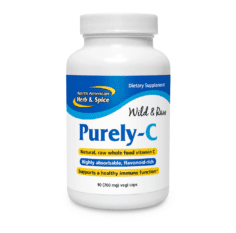
Purely-C Whole Food Vitamin C Complex | Capsules & Bulk Powder
Price range: $37.99 through $63.99 — or subscribe to save 15% Select options This product has multiple variants. The options may be chosen on the product page -
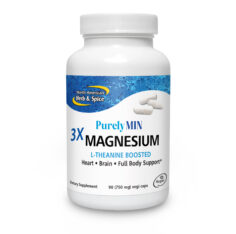
PurelyMin Magnesium Complex
$39.99 — or subscribe to save 15% Read more


