

A major new study just dropped, and if you take calcium and vitamin D for your bones, it is worth paying attention. Researchers published a review in The BMJ analyzing data from 69 clinical trials and nearly 154,000 people. Their conclusion: calcium supplements, vitamin D supplements, or taking both together provided little to no clinically meaningful protection against fractures or falls in most older adults. Read the study
154,000 people. 69 trials. Little to no meaningful benefit.
That is a stunning finding given how aggressively these two supplements have been marketed and recommended for decades. Millions of people are dutifully taking their calcium and D every day, trusting they are doing something real for their bones. And according to one of the largest reviews ever conducted on the subject, most of them are not getting the benefit they were promised.
So, what is going on? And more importantly, what does work?
The answer starts with understanding what bones actually need, and why calcium and vitamin D alone are never enough to deliver it.

The Missing Piece the Supplement Industry Forgot
Here is something that tends to surprise people: bone is not just mineral. It is roughly one-third protein by weight, and most of that protein is collagen. Collagen forms the flexible structure that gives bone its architecture, the framework into which calcium and other minerals are deposited. Without a healthy collagen matrix, minerals have nowhere meaningful to go. You can flood the system with calcium, but if the structural scaffolding is weak, compromised, or in short supply, the mineral cannot do its job.
The word collagen comes from kolla, the ancient Greek word for glue. That is exactly what it is: the biological glue that holds your skeletal system together. It gives bone its ability to flex slightly under load rather than snap. It cushions your joints. It reinforces your tendons and ligaments. And starting in your mid-20s, your body produces less of it every single year.
By age 40, collagen loss accelerates to roughly 1% per year. By 60, the cumulative deficit is significant.
Bones become more brittle, cartilage thins, joints lose their cushion, and connective tissue takes longer to recover from everyday stress. Depending on lifestyle factors, this aging process can happen more easily and quickly. The researchers behind the BMJ review conclude that future resources might be better directed toward strategies that actually work. Understanding the collagen connection is exactly where that conversation needs to start.

Why Collagen Without Vitamin C Is Half the Story
Here is a detail most collagen supplements quietly skip over. Your body cannot produce functional collagen without vitamin C. Not reduced collagen, not slower collagen. NONE! Why? Because Vitamin C is required for the hydroxylation of proline and lysine, the amino acids that give collagen its triple-helix structure and tensile strength. Without it, whatever collagen your body attempts to assemble is structurally defective and more prone to breakdown.
A systematic review published in the Orthopaedic Journal of Sports Medicine confirmed that vitamin C supplementation enhanced collagen synthesis, supported ligament and bone healing, and that deficiency directly impaired the body’s ability to rebuild connective tissue after injury. Researchers specifically noted that studies on fracture healing found significantly accelerated bone repair in the vitamin C group compared to controls. Read the study
A separate analysis in the journal Food & Function found that vitamin C, paired with collagen, meaningfully increased collagen synthesis markers, with the combination producing a substantially greater response than either alone. Read the study
Most collagen powders on the market contain zero vitamin C. They hand you the raw material and forget the construction crew.
This is the same category of error as taking calcium without addressing the collagen matrix it needs to bind to. A single ingredient fix that misses the system.

Calcium Still Matters. But the Form Changes Everything.
The BMJ review does not mean calcium is irrelevant to bone health. It means that calcium supplements in isolation, without the collagen matrix to receive them and the cofactors to activate them, are insufficient. The problem is the incomplete system, not the mineral itself.
This is where MCHC (microcrystalline hydroxyapatite) changes the conversation. MCHC is not a synthetic calcium salt. It is calcium as it actually exists in bone: already bound to phosphate in the same crystalline structure your skeleton uses, alongside bone matrix proteins that help deliver it naturally. A clinical study published in the British Journal of Nutrition found that MCHC supported bone mineral density in postmenopausal women without causing the blood calcium spikes associated with conventional supplements like calcium carbonate or citrate. Read the study
Calcium that mimics how bone naturally stores and releases minerals is simply a smarter approach than flooding your blood with a synthetic spike and hoping it lands in the right place.

The Mineral Most People Are Ignoring
If calcium is the concrete of bone, magnesium is the rebar. The structure may look solid without it, but it lacks the resilience to flex under load without cracking. And here is the overlooked problem hiding in the calcium-and-D conversation: low magnesium actively undermines both.
A review published in Frontiers in Endocrinology confirmed that magnesium deficiency affects bone health both directly, by reducing bone-building osteoblast activity and increasing bone-degrading osteoclast activity, and indirectly, by impairing the function of parathyroid hormone and vitamin D. Read the study
When magnesium is low, your body breaks down bone faster and builds it more slowly. That’s a direction you do not want to be moving in.
And then there is the vitamin D connection. Most people know vitamin D is critical for calcium absorption. Fewer know that vitamin D cannot be properly synthesized or activated without adequate magnesium. Magnesium is the essential cofactor in the enzymatic reactions that convert vitamin D from its inactive storage form into the active form your body can actually use.
Research published in Nutrients confirmed that magnesium is vital for vitamin D synthesis, transport, and activation. Read the study
This means that the people taking vitamin D supplements while running low on magnesium may be getting far less benefit than they expect. Sound familiar?

Shilajit: Ancient Mineral Intelligence for Modern Bone Support
Extracted from the rock faces of the Himalayas, Shilajit is one of the most mineral-dense compounds found in nature, formed over centuries from the decomposition of plant matter by microorganisms. It is rich in fulvic acid, 80+ trace minerals, and bioactive compounds that support the body’s absorption and use of nutrients at the cellular level. Think of it as nature’s own mineral delivery system.
In a 48-week randomized, double-blind, placebo-controlled clinical trial, postmenopausal women with osteopenia who supplemented with shilajit extract showed dose-dependent preservation of bone mineral density at both the lumbar spine and femoral neck. Women in the placebo group continued to lose bone mass throughout the trial. Those taking shilajit saw that loss meaningfully attenuated, alongside significant reductions in inflammation markers and bone turnover markers associated with breakdown. Read the study
The fulvic acid in shilajit acts as a natural transport molecule, helping minerals cross cell membranes more efficiently. It also supports collagen gene expression in connective tissue, making it a logical addition to any collagen and mineral protocol. When you pair shilajit with MCHC, you get the bone-matrix minerals in the right form, plus the biological intelligence to help the body use them.
What a Complete Protocol Actually Looks Like
The BMJ review’s conclusion was not that bones are beyond help. It was that the two-ingredient approach most people have been following, calcium plus vitamin D, is insufficient on its own. Which it clearly is. Bone health is a system, and the system requires all its parts:
- Grass-fed and finished collagen for the bioavailable amino acid building blocks of bone matrix and joint tissue
- Real whole-food vitamin C to enable the collagen synthesis your body cannot complete without it
- Calcium via MCHC in the crystalline form bone actually recognizes, not a synthetic spike
- Magnesium to support bone remodeling and unlock the vitamin D your body is already trying to use
- Shilajit for trace minerals, fulvic acid, and the cellular delivery mechanism that ties everything together
Leave any piece out, and you have a gap. Most supplement routines address one or two of these. The research and the pattern the BMJ study reveals suggest that isolated supplementation simply does not move the needle the way a complete system does.
The Glue That Holds It All Together
Remember that Greek word kolla? Glue. Your joints, your bones, your tendons, the architecture that lets you move through your day without thinking about it, it is all held together by a protein your body starts producing less of before most people even realize it is happening.
Collagen synthesis can be supported. Bone remodeling can be steered in a better direction. The minerals your skeleton needs exist in forms your body can benefit from. The vitamin C required to build functional collagen is available in food-based forms worth taking.
The calcium-and-D routine you have been told is probably not enough. But that does not mean your bones are beyond reach. It means the story is bigger than two ingredients, and now you know the rest of it.

Relevant NAHS Products of Support
CollaGem Premium Powder with eggshell membrane, grass-fed and finished collagen, and real whole-food vitamin C built in. Everything collagen should be: the structural protein and the cofactor that makes it functional, in a single daily scoop. Shop CollaGem Powder →
CollaGem Premium Capsules with MCHC and Shilajit for comprehensive mineral support. Pairs bone-matrix calcium with the mineral-delivery intelligence of shilajit. For best results, take alongside CollaGem Powder for a complete joint and bone protocol. Shop CollaGem Capsules →
Purely Min 3X Magnesium offers a 3 capsule serving that delivers 279mg of elemental magnesium along with 414mg of L-Theanine! Embrace the future of magnesium supplementation. Shop Purely Min Magnesium →
Purely C real vitamin C from Camu Camu, Acerola Cherry, and Rosehips, three of the most concentrated whole-food vitamin C sources on the planet. Available in capsules or powder. The powder delivers double the vitamin C per serving for a more concentrated daily dose. Shop Purely C →
These statements have not been evaluated by the Food and Drug Administration. These products are not intended to diagnose, treat, cure, or prevent any disease.
References
Masse, O., et al. (2026). Calcium, Vitamin D, or Combined Supplementation to Prevent Fractures and Falls. The BMJ. Read the study
DePhillipo, N. N., et al. (2018). Efficacy of Vitamin C Supplementation on Collagen Synthesis After Musculoskeletal Injuries. Orthopaedic Journal of Sports Medicine. Read the study
Rawson, E. S., et al. (2021). Effects of Collagen Peptide Supplementation on Collagen Synthesis and Recovery. PMC / British Journal of Nutrition. Read the study
Bristow, S. M., et al. (2014). Acute and 3-Month Effects of Microcrystalline Hydroxyapatite on Serum Calcium and Bone Turnover. British Journal of Nutrition. Read the study
Pellegrini, M., et al. (2024). The Role of Magnesium in the Pathogenesis of Osteoporosis. Frontiers in Endocrinology. Read the study
Farrokhyar, F., et al. (2025). The Importance of Vitamin D and Magnesium in Athletes. Nutrients / PMC. Read the study
Keller, J. L., et al. (2022). Shilajit Extract Reduces Bone Loss in Postmenopausal Women with Osteopenia: RCT. PubMed. Read the study
Explore our trending products:
-
Herbal-zzZs – Melatonin-Free Sleep Support
$31.99 — or subscribe to save 15% Add to cart -
Black Seed-Plus Capsules
$29.99 — or subscribe to save 15% Select options This product has multiple variants. The options may be chosen on the product page -
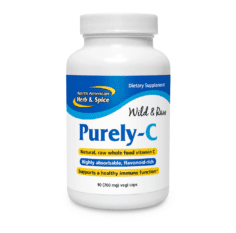
Purely-C Whole Food Vitamin C Complex | Capsules & Bulk Powder
Price range: $37.99 through $63.99 — or subscribe to save 15% Select options This product has multiple variants. The options may be chosen on the product page -
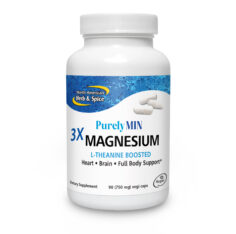
PurelyMin Magnesium Complex
$39.99 — or subscribe to save 15% Add to cart


