
If you get a pounding headache after a glass of red wine, break out in hives for no clear reason, or feel congested even when pollen counts are low, you may have chalked it up to allergies. But there’s a related, less talked about condition that can produce nearly identical symptoms without a single allergen in sight: histamine intolerance.
Histamine intolerance isn’t an allergy in the traditional sense. It’s a breakdown in how your body clears histamine once it’s already been released, and it may affect between 15 and 20 percent of the population, according to a 2025 review published in the International Journal of Molecular Sciences (Jackson et al., 2025). That’s a significant number of people dealing with symptoms that get misread, sometimes for years, as seasonal allergies, food sensitivities, or unexplained migraines.
Because the symptoms overlap so heavily with true allergic reactions, and because there’s no single standard test doctors agree on for diagnosing it, histamine intolerance tends to stay under the radar. Understanding the mechanism behind it, what histamine does, how the body normally clears it, and where that process can break down, is the clearest way to recognize whether it might be part of your own picture.
To understand what’s really going on, it helps to start with what histamine is supposed to do in a healthy body.

What Histamine Actually Does in Your Body
Histamine is a natural chemical messenger, and your body relies on it constantly, not just during allergy season. It’s stored primarily in mast cells and basophils, two types of immune cells stationed throughout your skin, respiratory tract, and digestive lining, ready to release histamine the moment they detect a threat.
Once released, histamine widens blood vessels and increases their permeability, which is what allows immune cells to rush to an injury or infection site. It’s also involved in regulating stomach acid production, supporting normal digestion, and acting as a neurotransmitter in the brain, where it influences alertness and sleep cycles.
In other words, histamine is not the enemy. It’s a normal, necessary part of how your immune system communicates and responds. Problems only start when histamine builds up faster than your body can break it down.

When the System Backs Up: DAO and Histamine Intolerance
Most of the histamine you encounter in daily life gets broken down in the gut by an enzyme called diamine oxidase, or DAO. DAO is produced by cells lining the small intestine, and its job is to neutralize dietary histamine, the kind found naturally in aged cheese, cured meats, fermented foods, wine, and leftovers, before it can build up in the bloodstream.
Histamine intolerance develops when DAO activity can’t keep pace with histamine intake. A 2018 study published in the journal Allergy used circadian monitoring to track histamine and DAO levels in patients with suspected histamine intolerance and found that 24 percent showed the telltale pattern of elevated plasma histamine paired with reduced DAO activity, compared to healthy controls and patients with confirmed food allergies (Pinzer et al., 2018). That combination, high histamine input and low enzymatic output, is the core mechanism behind most histamine intolerance symptoms.

Why It Looks So Much Like Allergies
Because histamine receptors are spread throughout the body, from the skin to the gut to the blood vessels, the symptoms of histamine intolerance can show up almost anywhere, which is exactly why it’s so often mistaken for something else.
Common presentations include headaches and migraines, hives, flushing or itchy skin, nasal congestion and sneezing, dizziness, bloating and abdominal discomfort, and a racing heartbeat after eating certain foods. Unlike a true food allergy, which triggers a rapid, dose independent immune reaction, histamine intolerance tends to be dose dependent. A small amount of aged cheese might not cause an issue, but pair it with a glass of wine and leftover soup, and the cumulative histamine load can tip the body into a reaction.
This is also why histamine intolerance symptoms often flare during high pollen seasons. Seasonal allergens trigger their own histamine release from mast cells in the nose and eyes, and that additional histamine load stacks on top of whatever your gut is already struggling to clear from food. The result can feel like allergies got worse this year, when what actually happened is your total histamine burden simply crossed a threshold.

What Causes DAO to Fall Behind
DAO activity isn’t fixed. Several factors can lower it, including genetic variations in the AOC1 gene that reduce enzyme production, damage to the intestinal lining from digestive conditions, certain medications that interfere with DAO function, and an overgrowth of gut bacteria that produce their own histamine (Jackson et al., 2025). Alcohol is a notable trigger as well, since it both delivers histamine directly and competes with DAO for processing, which is part of why red wine headaches are such a common complaint.
Diet plays a role too, but the goal isn’t necessarily to eliminate every histamine containing food forever. Strict low histamine diets can help identify a pattern in the short term, but they’re difficult to sustain and don’t address the underlying issue, which is a body that needs more support clearing histamine, not less exposure to life in general. For most people, the more realistic and sustainable goal is supporting the body’s natural capacity to keep up.

Supporting Histamine Balance Naturally
This is where the story connects directly to a topic we covered in a previous article, 5 Natural Ways to Support Your Body During Seasonal Changes. That piece walked through five whole food approaches for seasonal immune support, and each one lines up with the histamine mechanisms described here.
Wild Oregano Oil, the foundation of Oreganol P73, contains carvacrol, a compound that has been studied for its role in supporting normal mast cell function, the very cells responsible for releasing histamine in the first place. Turkish Black Seed Oil, rich in thymoquinone, has shown supportive factors in nasal congestion, sneezing, and nasal itching compared to placebo in clinical research, symptoms that overlap directly with a high histamine load.
Camu camu berries, the core ingredient in Purely-C, deliver natural vitamin C alongside flavonoids like quercetin. Vitamin C matters here because it acts as a cofactor that supports DAO enzyme activity. In a controlled study published in the Journal of Vestibular Research, participants given oral vitamin C showed measurably reduced blood histamine levels compared to placebo (Jarisch et al., 2014). Quercetin, meanwhile, has been shown in laboratory research to stabilize mast cell membranes and meaningfully reduce histamine release, in some studies by more than half, making it one of the more well documented plant compounds for this purpose (Mlcek et al., 2016).
Rounding out the previous article’s recommendations, wild caught sockeye salmon supplies omega-3 fatty acids that support healthy mucosal tissue, and a sea salt nasal wash like SinuOrega helps physically clear allergens and irritants before they trigger a fresh round of histamine release in the nasal passages.

The Bigger Picture
Allergies and histamine intolerance aren’t the same thing, but they share the same chemical messenger, and they respond to many of the same supportive strategies. If seasonal symptoms have never quite matched a typical allergy pattern, or if they show up alongside headaches, digestive upset, or skin reactions that seem to come out of nowhere, histamine intolerance is worth understanding as a piece of the puzzle.
Supporting your body’s natural histamine metabolism isn’t about eliminating an entire chemical from your life. It’s about giving the gut, the mast cells, and the enzymes involved the raw materials they need to keep up, whether that’s wild oregano, camu camu vitamin C, black seed oil, or simply paying closer attention to how your body responds after certain meals.
The next time a headache follows dinner, or hives show up without an obvious cause, or seasonal symptoms feel disproportionate to the pollen count, histamine is worth considering as the common thread. Understanding what’s happening beneath the surface is often the first step toward feeling better above it.
References
Jackson, K., Busse, W., Gálvez-Martín, P., Terradillos, A., & Martínez-Puig, D. (2025). Evidence for dietary management of histamine intolerance. International Journal of Molecular Sciences, 26(18), 9198. https://doi.org/10.3390/ijms26189198
Pinzer, T. C., Tietz, E., Waldmann, E., Schink, M., Neurath, M. F., & Zopf, Y. (2018). Circadian profiling reveals higher histamine plasma levels and lower diamine oxidase serum activities in 24% of patients with suspected histamine intolerance compared to food allergy and controls. Allergy, 73(4), 949-957.
Jarisch, R., Weyer, D., Ehlert, E., Koch, C. H., Pinkowski, E., Jung, P., Kähler, W., Girgensohn, R., Kowalski, J., Weisser, B., & Koch, A. (2014). Impact of oral vitamin C on histamine levels and seasickness. Journal of Vestibular Research, 24(4), 281-288.
Mlcek, J., Jurikova, T., Skrovankova, S., & Sochor, J. (2016). Quercetin and its anti-allergic immune response. Molecules, 21(5), 623.
These statements have not been evaluated by the Food and Drug Administration. These products are not intended to diagnose, treat, cure, or prevent any disease.
Explore our trending products:
-
Herbal-zzZs – Melatonin-Free Sleep Support
$31.99 — or subscribe to save 15% Add to cart -
Black Seed-Plus Capsules
$29.99 — or subscribe to save 15% Select options This product has multiple variants. The options may be chosen on the product page -
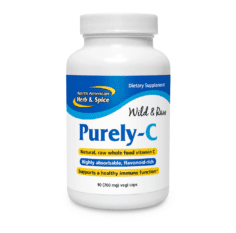
Purely-C Whole Food Vitamin C Complex | Capsules & Bulk Powder
Price range: $37.99 through $63.99 — or subscribe to save 15% Select options This product has multiple variants. The options may be chosen on the product page -
PurelyMin Magnesium Complex
$39.99 — or subscribe to save 15% Read more


